Technology Talent Strategy: Building and Retaining Engineering Teams
Introduction
Technology talent remains the critical constraint for most enterprises. Strategies succeed or fail based on the ability to attract, develop, and retain skilled technologists. The market for technology talent is competitive, and that competition shows no signs of easing.
Yet many enterprises approach talent reactively—hiring when positions open, reacting when people leave, training when skills become obviously inadequate. This reactive approach leaves organisations perpetually behind.
CTOs who treat talent as a strategic priority—investing proactively in attraction, development, and retention—build sustainable competitive advantage. This guide covers how.
The Talent Landscape
Market Reality
The technology talent market has structural characteristics:
Persistent Demand
Technology skills remain scarce:
- Digital transformation driving demand
- Every company becoming a technology company
- New specialities emerging continuously
- Demographics limiting supply growth
Geographic Distribution
Remote work has changed dynamics:
- Competition is increasingly global
- Location premiums shifting
- Remote-first companies competing everywhere
- Local talent pools less relevant
Evolving Skills
What’s needed keeps changing:
- Cloud and modern infrastructure
- AI and machine learning emerging
- Security growing in importance
- New languages and frameworks
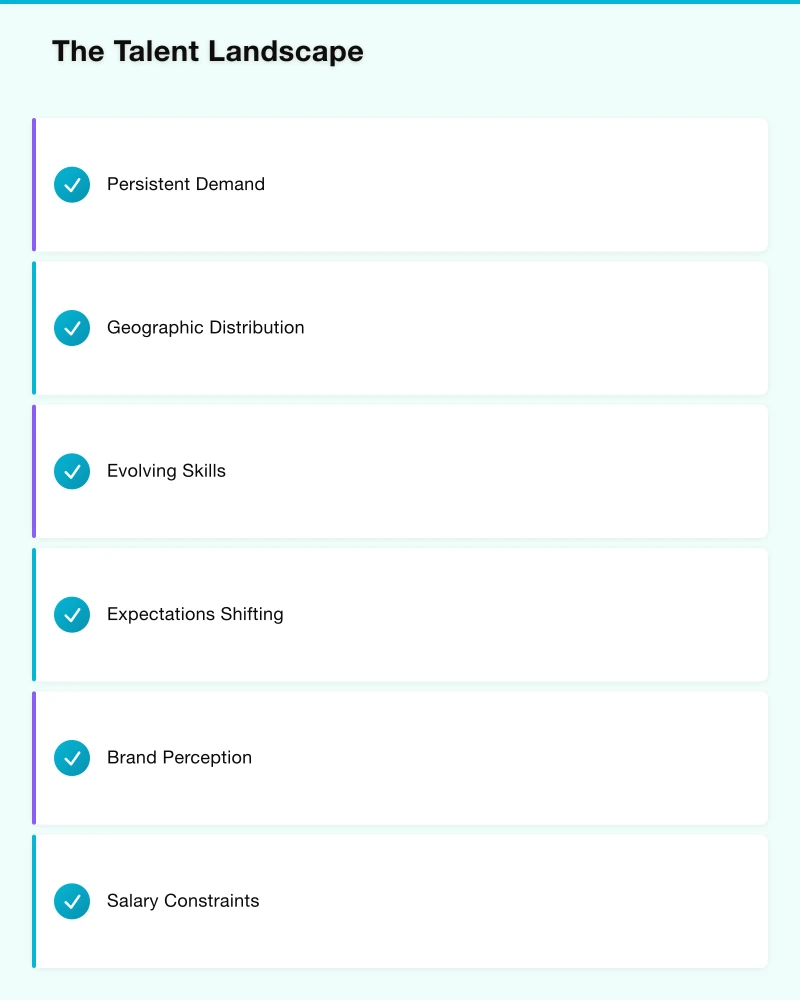
Expectations Shifting
What talent wants has evolved:
- Flexibility in work arrangements
- Meaningful work and impact
- Growth and development opportunities
- Compensation remaining important but not sufficient
Enterprise Challenges
Large organisations face specific challenges:
Brand Perception
Competing with tech companies:
- Tech-native companies seen as more exciting
- Enterprise perceived as slow and bureaucratic
- Legacy technology reputation
- Career progression concerns
Salary Constraints
Budget realities:
- Compensation bands limit flexibility
- Equity competition difficult
- Total compensation complexity
- Internal equity pressures
Process Overhead
Organisational friction:
- Lengthy hiring processes
- Multiple approval layers
- Bureaucratic onboarding
- Limited autonomy perception
Building Talent Strategy
Strategic Workforce Planning
Start with forward-looking analysis:
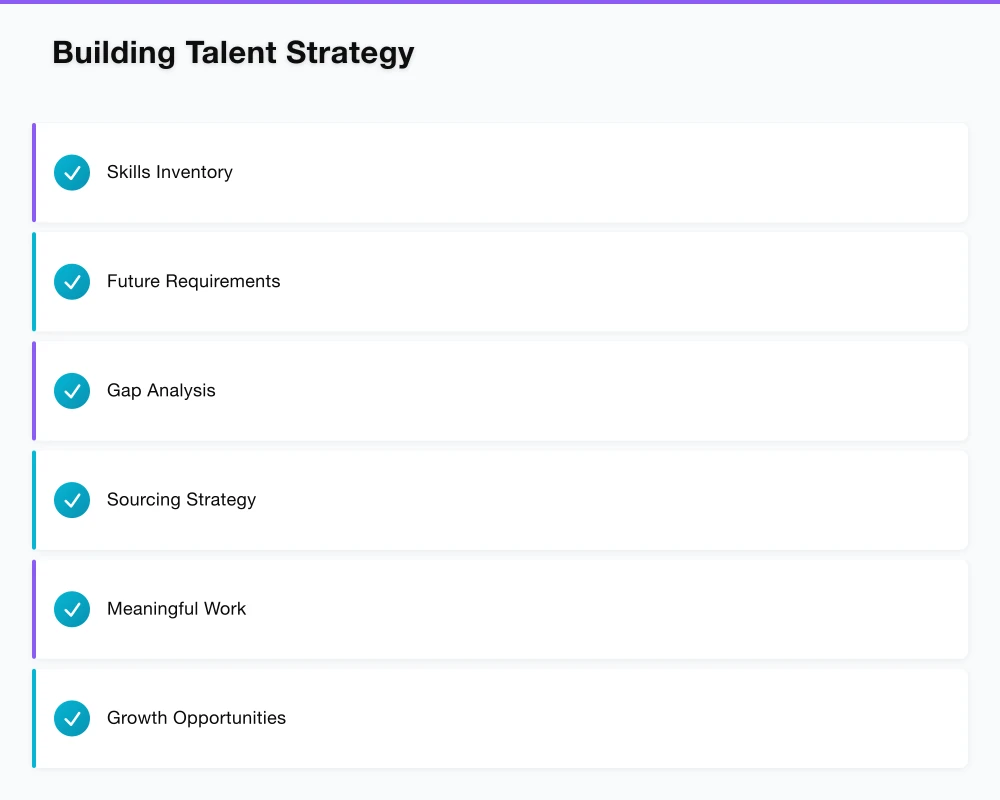
Skills Inventory
Understand current state:
- What skills do we have?
- Where are the gaps?
- What’s the distribution of experience?
- Where is knowledge concentrated?
Future Requirements
Project forward needs:
- Technology roadmap implications
- Business growth plans
- Anticipated attrition
- Emerging skill needs
Gap Analysis
Identify mismatches:
- Critical gaps (immediate impact)
- Emerging gaps (building concern)
- Concentration risks (key person dependencies)
- Quantity vs quality issues
Sourcing Strategy
Plan how to address gaps:
- Build (develop internally)
- Buy (hire externally)
- Borrow (contractors, partners)
- Bot (automation, AI)
Employer Value Proposition
Define why talent should choose you:
Meaningful Work
What makes work here meaningful?
- Impact on customers or society
- Interesting technical challenges
- Autonomy and ownership
- Innovation opportunities
Growth Opportunities
How do people develop?
- Career progression paths
- Learning and development
- Exposure to new technologies
- Leadership opportunities
Culture and Environment
What’s it like to work here?
- Team dynamics
- Management approach
- Work-life balance
- Inclusion and belonging
Compensation
Total rewards package:
- Base salary competitiveness
- Bonus and incentive structures
- Equity participation
- Benefits and perks
Flexibility
Work arrangements:
- Remote work options
- Schedule flexibility
- Location choices
- Work-life integration
Be honest about strengths and realistic about constraints.
Attracting Talent
Sourcing Strategies
Direct Sourcing
Building talent pipelines:
- Employee referral programmes
- Direct candidate outreach
- University relationships
- Community engagement
Agency Partnerships
When to use external recruiters:
- Hard-to-fill specialities
- Volume requirements
- Geographic expansion
- Confidential searches
Employer Branding
Building awareness:
- Engineering blog and content
- Conference participation
- Open source contributions
- Social media presence
Hiring Process Design
Speed Matters
Fast processes win:
- Streamlined approvals
- Efficient scheduling
- Quick feedback loops
- Decisive offers
Good candidates don’t wait.
Experience Quality
Every touchpoint matters:
- Professional communication
- Respectful process
- Timely updates
- Genuine engagement
Candidates talk. Bad experiences spread.
Assessment Effectiveness
Evaluate what matters:
- Technical competence
- Problem-solving approach
- Collaboration capability
- Culture addition potential
Avoid:
- Gotcha questions
- Irrelevant puzzles
- Process as hazing
- Unconscious bias amplification
Competitive Compensation
Market Positioning
Decide where to position:
- Above market for critical roles
- At market for standard roles
- Strategic premium for specific skills
Total Compensation
Consider full package:
- Base salary
- Bonus potential
- Equity where possible
- Benefits value
- Flexibility value
Internal Equity
Balance with existing team:
- Compression issues are real
- Retention adjustments may be needed
- Transparency helps
- Fairness matters
Retaining Talent
Understanding Attrition
Why People Leave
Common drivers:
- Better opportunities (compensation, role)
- Management issues
- Lack of growth
- Work-life balance
- Cultural misfit
- Burnout
Exit Intelligence
Learn from departures:
- Genuine exit conversations
- Pattern analysis
- Root cause investigation
- Action on findings
Predictive Indicators
Watch for warning signs:
- Engagement decline
- Reduced participation
- Resume updates (when visible)
- Expressed frustration
Retention Levers
Career Development
Create growth paths:
- Clear progression frameworks
- Individual development plans
- Stretch assignments
- Mentorship programmes
- Leadership tracks and technical tracks
Compensation Maintenance
Stay competitive:
- Regular market benchmarking
- Proactive adjustments
- Retention considerations
- Equity refreshes where applicable
Manager Quality
People leave managers:
- Invest in management training
- Hold managers accountable
- Provide management support
- Address poor management
Work Environment
Day-to-day experience:
- Interesting challenges
- Appropriate autonomy
- Effective tools and processes
- Manageable workload
Recognition
Acknowledge contributions:
- Regular feedback
- Public recognition
- Career advancement
- Meaningful rewards
Retention Analytics
Measuring Retention
Track key metrics:
- Voluntary turnover rate
- Regrettable vs non-regrettable turnover
- Tenure distribution
- High performer retention
Cohort Analysis
Understand patterns:
- Tenure at risk points
- Characteristics of leavers
- Source quality correlation
- Manager influence
Developing Talent
Learning and Development
Technical Skills
Keep skills current:
- Training budgets
- Conference attendance
- Certification support
- Learning time allocation
Leadership Development
Build management pipeline:
- First-time manager programmes
- Leadership training
- Mentorship and coaching
- Succession planning
Exposure and Experience
Learning through doing:
- Rotation programmes
- Cross-functional projects
- Stretch assignments
- Internal mobility
Knowledge Management
Preventing Knowledge Loss
Protect organisational knowledge:
- Documentation practices
- Code reviews and pairing
- Knowledge sharing sessions
- Cross-training
Building Institutional Knowledge
Create shared understanding:
- Architecture decision records
- Runbooks and playbooks
- Onboarding programmes
- Communities of practice
Succession Planning
Critical Role Identification
Know where risk exists:
- Key person dependencies
- Specialised knowledge holders
- Leadership positions
- Critical system experts
Successor Development
Build readiness:
- Identified successors
- Development plans
- Exposure opportunities
- Readiness assessment
Team Design
Structure Considerations
Team Size
Effective team units:
- Small enough for cohesion (5-9 typical)
- Large enough for coverage
- Clear ownership boundaries
- Manageable span of control
Team Composition
Balance within teams:
- Experience levels
- Skill diversity
- Perspectives and backgrounds
- Personality types
Organisational Models
Structure options:
- Product-aligned teams
- Platform teams
- Functional specialisation
- Matrix approaches
Culture Building
Engineering Culture
What kind of culture?
- Technical excellence
- Collaboration norms
- Learning orientation
- Accountability standards
Deliberate Development
Culture doesn’t happen by accident:
- Articulate values clearly
- Model expected behaviours
- Reward aligned actions
- Address misalignment
Inclusion
Diverse teams perform better:
- Inclusive hiring practices
- Equitable processes
- Belonging investment
- Bias mitigation
Measuring Success
Talent Metrics
Acquisition Metrics
- Time to fill
- Offer acceptance rate
- Source effectiveness
- Quality of hire (longer term)
Retention Metrics
- Voluntary turnover rate
- First-year attrition
- High performer retention
- Tenure distribution
Development Metrics
- Internal mobility rate
- Promotion rate
- Training investment
- Skill growth indicators
Engagement Indicators
- Employee satisfaction surveys
- eNPS scores
- Participation metrics
- Discretionary effort indicators
Strategic Assessment
Beyond metrics:
- Do we have the skills we need?
- Are we building future capability?
- Is the team engaged and productive?
- Are we competitive for talent?
Conclusion
Technology talent strategy is a sustained investment, not a periodic exercise. The organisations that build strong technology teams do so through consistent attention to attraction, development, and retention—not just when positions open or people leave.
Start with understanding: what talent do you need, what do you have, where are the gaps? Build honest value propositions that acknowledge constraints while highlighting genuine strengths. Invest in the employee experience throughout the lifecycle.
The technology talent market will remain competitive. The enterprises that succeed will be those that treat talent as the strategic asset it is.
Sources
- LinkedIn. (2023). Global Talent Trends. LinkedIn Economic Graph.
- Stack Overflow. (2023). Developer Survey. Stack Overflow Insights. https://survey.stackoverflow.co/
- McKinsey. (2022). The Great Attrition: Actions to Take. McKinsey Quarterly.
- SHRM. (2022). The State of the Workplace. Society for Human Resource Management.
Strategic guidance for technology leaders building high-performing teams.
Turning strategy into infrastructure? Cloud Geeks covers managed cloud, DevOps, and IT security for businesses putting digital plans into action.
Ash Ganda is the founder of Ganda Tech Services, a Sydney-based technology consultancy delivering cloud, web, and mobile solutions for Australian businesses.
About the Author
Ashish Ganda is the founder of Ganda Tech Services, a Sydney-based technology consultancy specialising in cloud infrastructure, web development, and mobile app solutions for Australian businesses.
Digital Transformation Roadmap 2026
A 12-month framework for Australian SMBs ready to modernise — phases, tools, and milestones.