The CTO's Guide to Technical Interviews and Hiring in 2025
Introduction
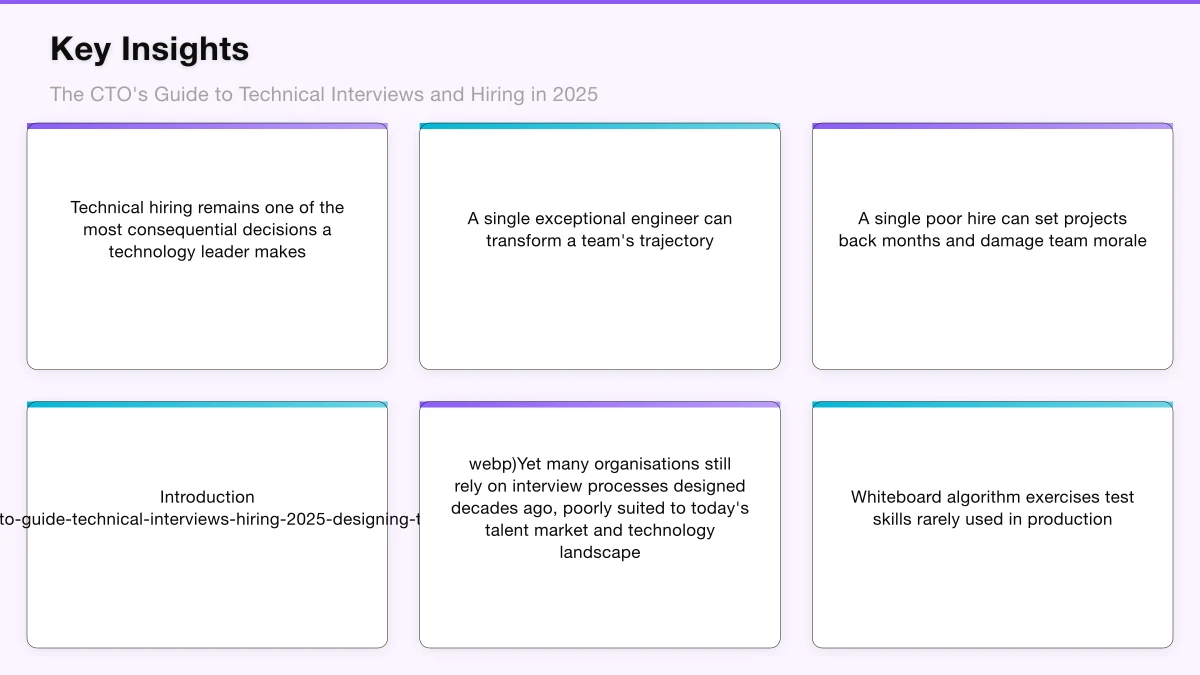
Technical hiring remains one of the most consequential decisions a technology leader makes. A single exceptional engineer can transform a team’s trajectory. A single poor hire can set projects back months and damage team morale.
Yet many organisations still rely on interview processes designed decades ago, poorly suited to today’s talent market and technology landscape. Whiteboard algorithm exercises test skills rarely used in production. Take-home assignments impose hours of unpaid labour. Panel interviews create stress without revealing genuine capability.
This guide examines how CTOs should approach technical hiring in 2025—from process design to candidate experience to making decisions that stick.
The Changed Hiring Landscape
Market Dynamics in 2025
The technical hiring market has evolved significantly:
Candidate Expectations
Top engineers expect:
- Remote and hybrid flexibility as standard
- Transparent compensation before investing interview time
- Efficient processes respecting their time
- Clear growth paths and learning opportunities
- Meaningful work with visible impact
Competition Intensity
Demand for certain skills remains acute:
- AI/ML engineering expertise
- Platform and infrastructure specialists
- Security-focused engineers
- Full-stack developers with cloud proficiency
Meanwhile, some previously scarce skills have become more available as companies have adjusted headcounts.
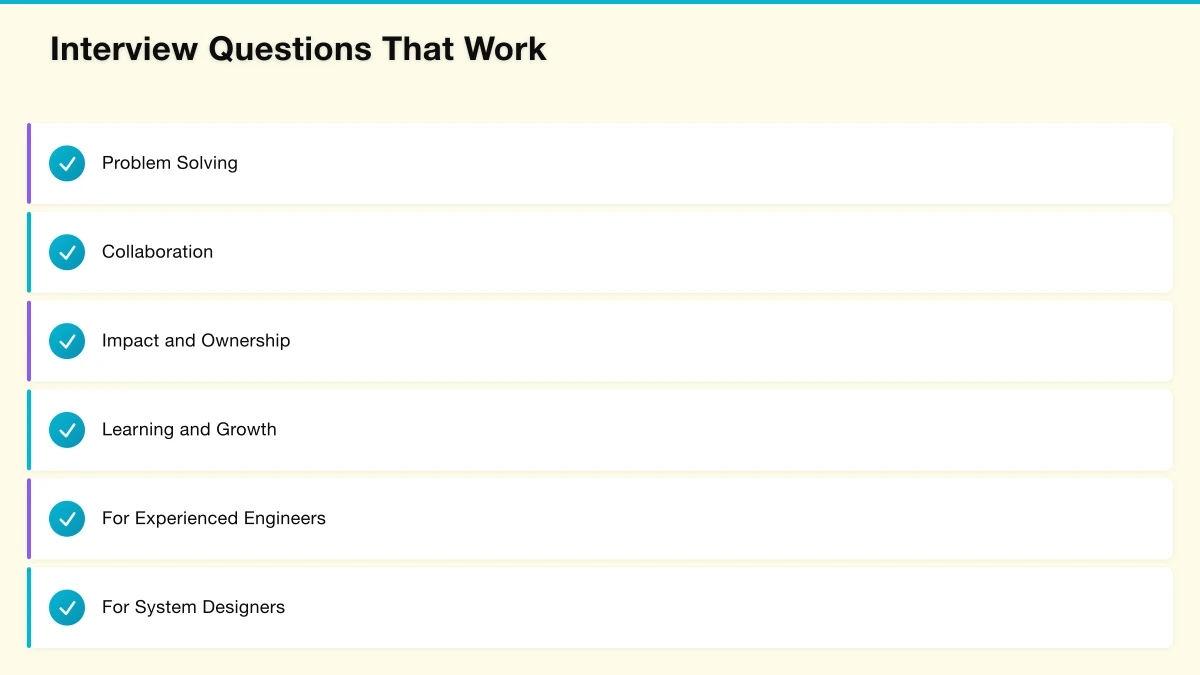
Process Fatigue
Candidates with options avoid organisations with:
- Multi-week interview marathons
- Unpaid multi-day take-home projects
- Disorganised or disrespectful processes
- Slow decision-making and poor communication
Your hiring process is a product. Its quality signals your organisation’s quality.
What Actually Predicts Success
Research consistently shows that traditional interview practices correlate poorly with job performance:
Weak Predictors
- Algorithm puzzle performance
- Years of experience alone
- Prestigious company backgrounds
- Whiteboard coding under pressure
- Unstructured conversational interviews
Stronger Predictors
- Work sample tests (actual job tasks)
- Structured interviews with consistent questions
- Cognitive ability assessments
- Past project discussions with depth
- Reference checks with specific questions
The implication: redesign processes around what actually works.
Designing the Interview Process
Core Principles
Respect Candidate Time
Total interview time investment should be proportional to role level:
- Junior roles: 3-4 hours maximum
- Mid-level roles: 4-6 hours maximum
- Senior/staff roles: 6-8 hours maximum
- Executive roles: May warrant more, but efficiency still matters
Every hour you ask candidates to invest should provide clear signal.
Consistency Enables Comparison
Structured processes with consistent questions allow fair comparison:
- Same core questions for all candidates
- Standardised scoring rubrics
- Multiple interviewers reducing individual bias
- Documentation enabling calibration
Authenticity Over Performance
Design exercises that reveal how candidates actually work:
- Realistic problems from your domain
- Collaborative rather than adversarial dynamics
- Access to tools they would use on the job
- Time for questions and discussion
Two-Way Evaluation
Remember candidates are evaluating you:
- Showcase your best people as interviewers
- Demonstrate your culture through the process
- Provide genuine insight into the role
- Answer questions honestly, including about challenges
Process Structure
A well-designed process typically includes:
Stage 1: Initial Screen (30-45 minutes)
Conducted by recruiter or hiring manager:
- Role fit and interest alignment
- Compensation expectations transparency
- Logistical requirements (location, start date)
- High-level experience validation
- Candidate questions about the opportunity
Outcome: Mutual decision to proceed or exit gracefully.
Stage 2: Technical Screen (60-90 minutes)
Conducted by senior engineer:
- Technical background discussion
- Coding or problem-solving exercise
- Architecture or design conversation
- Questions revealing depth of experience
Focus: Can this person do the technical work?
Stage 3: Deep Dive (2-4 hours)
Multiple sessions covering different dimensions:
- Technical depth in relevant areas
- System design appropriate to level
- Collaboration and communication assessment
- Cultural and values alignment
Focus: Will this person thrive here and make the team better?
Stage 4: Final Conversations
For senior roles, conversations with:
- Skip-level leadership
- Cross-functional stakeholders
- Potential peers on the team
Focus: Mutual fit confirmation and relationship building.
Technical Assessment Options
Pair Programming Session
Working together on a realistic problem:
Advantages:
- Reveals collaboration style
- Shows how they handle ambiguity
- Demonstrates communication ability
- More comfortable than solo performance
Best practices:
- Use your actual codebase (sanitised if needed)
- Have interviewer actively participate
- Allow questions and discussion
- Focus on approach, not just solution
Take-Home Project
Completing a defined task asynchronously:
Advantages:
- Realistic working conditions
- Candidates can show best work
- Respects different working styles
- Less performance anxiety
Critical considerations:
- Limit to 2-3 hours maximum (respect their time)
- Provide clear requirements and evaluation criteria
- Pay for longer exercises or use them only for final candidates
- Include follow-up discussion to understand decisions
Live System Design
Architectural discussion of a hypothetical system:
Advantages:
- Reveals systems thinking
- Shows communication of complex ideas
- Scales difficulty to candidate level
- Interactive and collaborative
Best practices:
- Match complexity to role level
- Allow them to ask clarifying questions
- Explore trade-offs, not “right answers”
- Discuss real-world constraints
Portfolio and Project Review
Deep discussion of past work:
Advantages:
- Based on real accomplishments
- Reveals depth of contribution
- Shows self-awareness and learning
- Less artificial than exercises
Best practices:
- Request specific projects in advance
- Ask probing questions about decisions
- Explore failures and learnings
- Verify actual contribution level
Interview Questions That Work
Structured Behavioural Questions
Use the same questions for all candidates, probing with follow-ups:
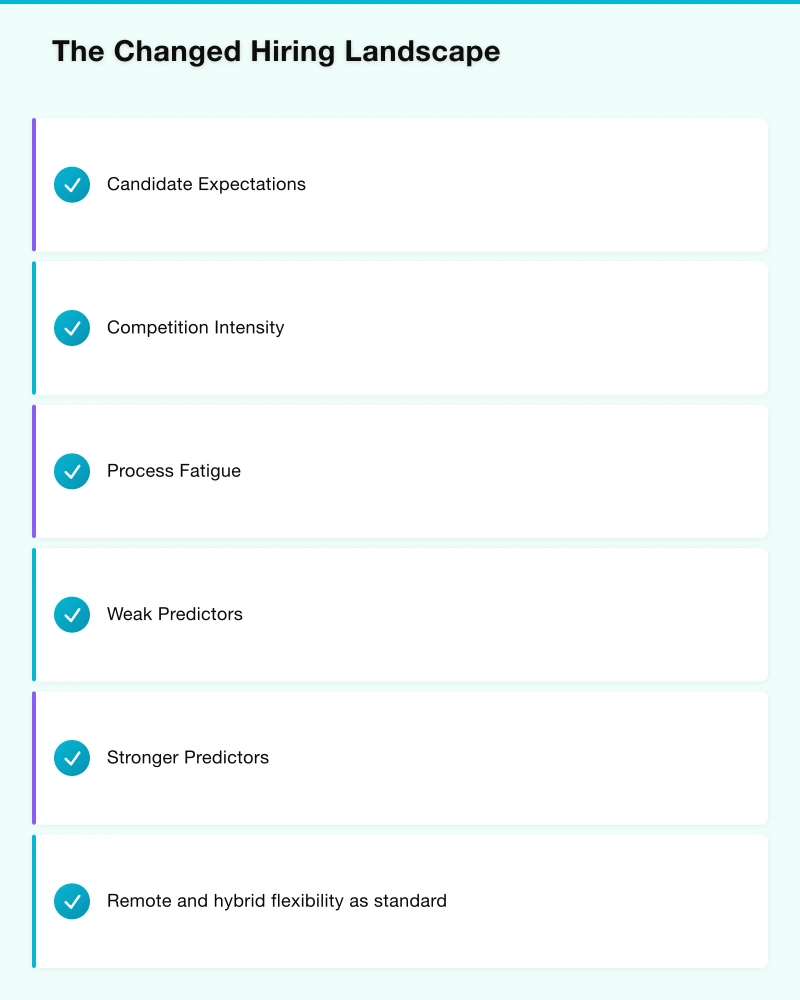
Problem Solving
“Tell me about a time you faced a technical problem where the solution wasn’t obvious. Walk me through how you approached it.”
Follow-ups:
- What alternatives did you consider?
- How did you decide between options?
- What would you do differently now?
Collaboration
“Describe a situation where you disagreed with a technical decision. How did you handle it?”
Follow-ups:
- How did you express your concerns?
- What was the outcome?
- How did it affect your working relationship?
Impact and Ownership
“What’s the most significant technical contribution you’ve made in the past two years? Help me understand the before and after.”
Follow-ups:
- How did you measure success?
- What challenges did you face?
- Who else was involved?
Learning and Growth
“Tell me about a technology or approach you initially dismissed but later adopted. What changed your mind?”
Follow-ups:
- What triggered the reconsideration?
- How did you get up to speed?
- What did you learn about your own biases?
Technical Depth Questions
Probe genuine expertise versus surface familiarity:
For Experienced Engineers
“You mentioned experience with [technology]. Walk me through a specific implementation decision you made and the trade-offs involved.”
Red flags:
- Cannot explain decisions beyond “best practice”
- Lacks awareness of alternatives
- Unable to discuss downsides
Green flags:
- Clear articulation of context and constraints
- Awareness of trade-offs made
- Learning from outcomes
For System Designers
“If you were designing [relevant system], what would be your first questions before proposing architecture?”
Evaluating:
- Do they clarify requirements before solutioning?
- Do they consider scale, reliability, and cost?
- Do they acknowledge uncertainty appropriately?
For Senior/Staff Candidates
“How do you decide when to pay down technical debt versus continue building features?”
Evaluating:
- Strategic thinking about trade-offs
- Ability to communicate with non-technical stakeholders
- Experience balancing competing priorities
Culture and Values Questions
Assess alignment without leading questions:
Instead of: “Do you like working in a collaborative environment?” Ask: “Describe your ideal working relationship with teammates. What does effective collaboration look like to you?”
Instead of: “Are you comfortable with ambiguity?” Ask: “Tell me about a time you had to make progress without clear direction. How did you handle it?”
Instead of: “Do you take ownership?” Ask: “Walk me through how you handled something that went wrong. What was your role in addressing it?”
Making Better Decisions
Structured Evaluation
Scoring Rubrics
Define what good looks like for each competency:
| Score | Description |
|---|---|
| 1 | Does not meet requirements |
| 2 | Partially meets requirements, significant concerns |
| 3 | Meets requirements, solid performance |
| 4 | Exceeds requirements, notable strengths |
| 5 | Exceptional, among best candidates seen |
Apply consistently across candidates and interviewers.
Independent Assessments
Have interviewers submit evaluations before debrief discussions:
- Prevents anchoring on early opinions
- Surfaces genuine disagreements
- Creates documentation for later calibration
- Reduces groupthink in decisions
Debrief Structure
Run effective debrief meetings:
- Each interviewer shares assessment independently
- Discuss areas of agreement and disagreement
- Focus on evidence, not impressions
- Identify additional information needs
- Make clear hiring recommendation
Avoiding Common Biases
Similarity Bias
Favouring candidates who resemble current team members.
Mitigation:
- Diverse interview panels
- Structured evaluation criteria
- Focus on capabilities, not style
Halo Effect
Letting one strong impression colour overall assessment.
Mitigation:
- Separate evaluations by competency
- Multiple interviewers for different dimensions
- Explicit consideration of weaknesses
Recency Bias
Overweighting recent candidates versus earlier ones.
Mitigation:
- Structured scoring documented immediately
- Regular calibration across candidates
- Comparative evaluation sessions
Confirmation Bias
Seeking evidence supporting initial impressions.
Mitigation:
- Assign interviewers to probe specific concerns
- Require evidence for both strengths and weaknesses
- Devil’s advocate role in debriefs
When to Say No
Develop clarity on non-negotiable requirements:
Technical Minimums
What baseline capabilities are required regardless of other strengths?
Cultural Non-Negotiables
What behaviours or values would be incompatible with team success?
Red Flags
What signals warrant serious concern?
- Inability to acknowledge mistakes or learnings
- Disrespect toward former colleagues
- Misrepresentation of experience or contribution
- Concerning reference feedback
Be willing to continue searching rather than lower standards. A wrong hire costs far more than an extended search.
Candidate Experience Excellence
Communication Standards
Speed
- Acknowledge applications within 48 hours
- Provide feedback within 3 business days of interviews
- Extend offers within 1 week of final interviews
- Respond to candidate questions within 24 hours
Transparency
- Share process timeline upfront
- Explain what each stage assesses
- Provide compensation ranges early
- Be honest about role challenges
Closure
Every candidate deserves a clear outcome:
- Personalised rejection (not form letters) for interviewed candidates
- Constructive feedback when appropriate
- Genuine thanks for their time investment
Interviewer Training
Invest in interviewer capability:
Required Training
- Structured interviewing techniques
- Unconscious bias awareness
- Legal compliance (appropriate questions)
- Your specific evaluation framework
Ongoing Calibration
- Regular debrief reviews
- Cross-interviewer comparison
- Feedback on interviewer performance
- Candidate experience surveys
Process Optimisation
Continuously improve based on data:
Track Metrics
- Time to hire by stage
- Candidate drop-off points
- Offer acceptance rates
- Post-hire performance correlation
- Candidate NPS scores
Gather Feedback
- Survey all candidates (including rejected)
- Interviewer experience assessment
- Hiring manager satisfaction
- New hire retrospectives
Special Considerations
AI and Automation
Use technology appropriately in hiring:
Appropriate Uses
- Scheduling coordination
- Initial resume parsing
- Process status communication
- Interview recording (with consent)
Caution Areas
- Automated screening decisions
- AI-scored technical assessments
- Chatbot-only initial interactions
- Algorithmic bias in filtering
Human judgment remains essential for hiring decisions. Automation should enhance efficiency, not replace discernment.
Remote Hiring
For distributed teams:
Video Interview Best Practices
- Test technology in advance
- Provide candidates with platform details
- Have backup communication channels
- Allow extra time for technical difficulties
Assessment Adaptations
- Screen sharing for coding exercises
- Collaborative documents for design sessions
- Asynchronous options for time zone challenges
- Clear instructions for take-home work
Onboarding Planning
- Discuss remote work expectations during interviews
- Assess self-direction and communication skills
- Plan virtual integration with team
Hiring for AI/ML Roles
Current high-demand areas require adapted approaches:
Technical Assessment
- Balance theory and practical application
- Include data analysis components
- Assess ability to explain complex concepts
- Test real-world problem framing
Market Reality
- Compensation premiums for proven expertise
- Competition from well-funded AI companies
- Consider building through upskilling existing team
- Value learning ability over current knowledge
Building Hiring as Capability
Organisational Investment
Make hiring a sustained competency:
Dedicated Resources
- Technical recruiters who understand engineering
- Interview coordination support
- Employer branding investment
- Recruiting tools and systems
Engineering Involvement
- Interviewing as expected contribution
- Protected time for hiring activities
- Recognition for participation
- Career credit for hiring impact
Leadership Attention
- Hiring metrics in leadership reviews
- Regular process evaluation
- Investment in improvements
- Accountability for outcomes
Measuring Success
Define and track meaningful outcomes:
Efficiency Metrics
- Time to fill open positions
- Interview to offer ratio
- Offer acceptance rate
- Cost per hire
Quality Metrics
- New hire performance ratings
- Retention at 1 and 2 years
- Hiring manager satisfaction
- Team performance improvement
Experience Metrics
- Candidate satisfaction scores
- Glassdoor/LinkedIn employer ratings
- Referral rates from past candidates
- Interviewer engagement
Conclusion
Technical hiring excellence is a competitive advantage. Organisations that attract, assess, and secure exceptional talent outperform those that struggle with hiring.
The principles are straightforward: respect candidate time, assess what actually predicts success, make evidence-based decisions, and continuously improve the process.
The execution requires sustained investment in people, process, and tools. It requires treating hiring as a core organisational capability, not an administrative burden.
Your technical team is your technology strategy made real. Hire accordingly.
Sources
- Schmidt, F. L., & Hunter, J. E. (2016). The Validity and Utility of Selection Methods in Personnel Psychology. Psychological Bulletin.
- Bohnet, I. (2016). What Works: Gender Equality by Design. Harvard University Press.
- Forsythe, D. (2024). Technical Hiring at Scale. O’Reilly Media.
- SHRM. (2025). Talent Acquisition Benchmarking Report. Society for Human Resource Management.
Strategic guidance for technology leaders building exceptional engineering teams.
Turning strategy into infrastructure? Cloud Geeks covers managed cloud, DevOps, and IT security for businesses putting digital plans into action.
As founder of Ganda Tech Services, I work with Australian businesses to align technology investments with business growth — across cloud, web, and mobile.
About the Author
Ashish Ganda is the founder of Ganda Tech Services, a Sydney-based technology consultancy specialising in cloud infrastructure, web development, and mobile app solutions for Australian businesses.
Digital Transformation Roadmap 2026
A 12-month framework for Australian SMBs ready to modernise — phases, tools, and milestones.
Almost done
Check your inbox and click the confirmation link to get your download.