Technology Due Diligence in M&A: The CTO's Playbook
Introduction
Mergers and acquisitions increasingly hinge on technology. Whether acquiring for technology assets, customer data, talent, or market position, understanding what you’re actually buying is essential. Yet technology due diligence is often rushed, superficial, or delegated to people without the expertise to spot issues.
The cost of inadequate due diligence appears post-close: integration failures, security incidents, talent departures, and technology that doesn’t deliver expected value. This guide provides a framework for thorough technology assessment.
Why Technology Due Diligence Matters
Value Validation
Technology often justifies acquisition premiums:
- Proprietary technology claims
- Data assets
- Platform capabilities
- Technical talent
- Customer technology dependencies
Validating these claims protects against overpaying.
Risk Identification
Hidden technology risks can destroy deal value:
- Security vulnerabilities
- Technical debt requiring massive investment
- Scalability limitations
- Compliance gaps
- Key person dependencies
Better to discover these before closing.
Integration Planning
Understanding technology landscape enables:
- Realistic integration timelines
- Accurate cost estimates
- Retention strategies for key talent
- Architecture decisions
- Synergy identification
Due diligence feeds directly into integration success.
Due Diligence Framework
Scope Definition
Not all acquisitions require the same depth:
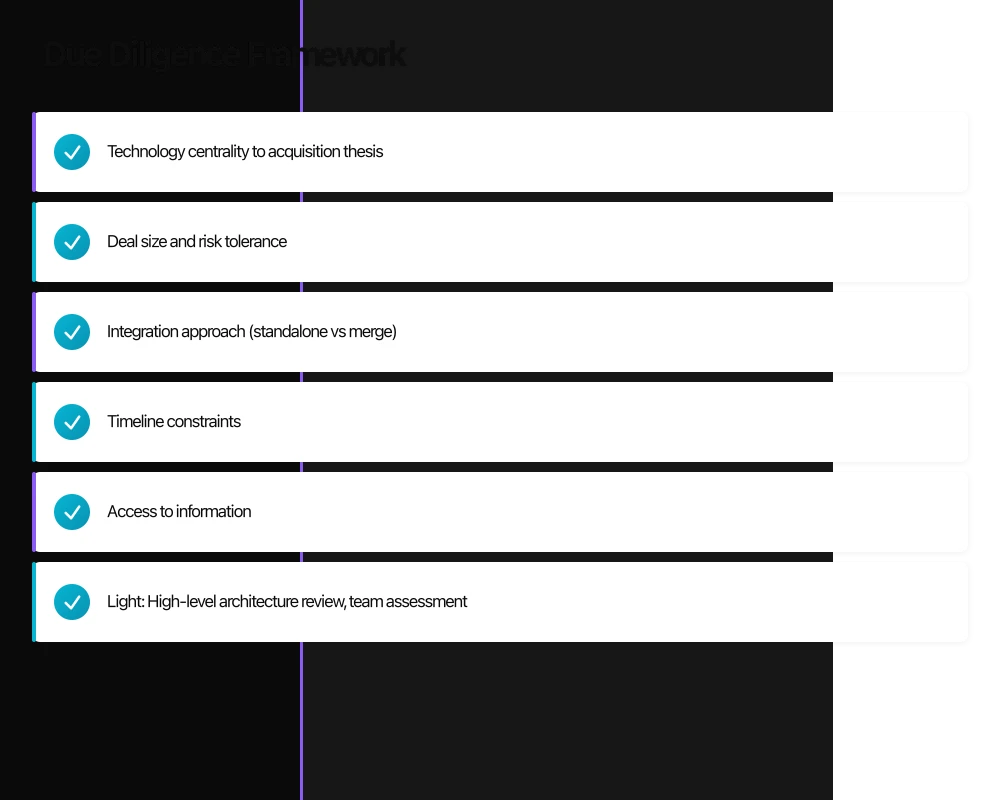
Factors Affecting Scope
- Technology centrality to acquisition thesis
- Deal size and risk tolerance
- Integration approach (standalone vs merge)
- Timeline constraints
- Access to information
Common Scope Levels
- Light: High-level architecture review, team assessment
- Standard: Technical deep dive, security review, IP assessment
- Comprehensive: Full code review, penetration testing, detailed technical debt analysis
Match scope to risk and value at stake.
Information Gathering
Documentation Request
- System architecture diagrams
- Technology stack documentation
- Security policies and assessments
- Incident history
- Organisational charts
- Vendor contracts
- IP assignments and agreements
Technical Access
- Code repository access (with appropriate protections)
- Infrastructure review
- System demonstrations
- Technical team interviews
Data Room Organisation
- Structured request lists
- Clear naming conventions
- Version control on documents
- Secure access management
Assessment Areas
Architecture and Systems
Current State
- System landscape and integrations
- Technology stack choices
- Infrastructure (cloud, on-premises, hybrid)
- Scalability architecture
- Disaster recovery capabilities
Key Questions
- Can the architecture support growth projections?
- Are there single points of failure?
- How modern or dated is the technology?
- What are the integration points with customers?
- How dependent on specific platforms or vendors?
Red Flags
- Undocumented architecture
- Heavy reliance on end-of-life technology
- Scaling approaches that don’t match growth plans
- Critical systems with no redundancy
Technical Debt
Assessment Approach
- Code quality metrics (if code access available)
- Team estimates and perceptions
- Maintenance effort analysis
- Known issues and workarounds
Categories
- Architecture debt: Fundamental design limitations
- Code debt: Quality issues in implementation
- Infrastructure debt: Outdated or misconfigured systems
- Documentation debt: Missing or outdated documentation
- Test debt: Inadequate automated testing
Quantification
Estimate remediation costs:
- Engineering effort required
- Timeline for addressing
- Risk of not addressing
- Impact on integration
Security Posture
Policy and Process
- Security policies and standards
- Incident response procedures
- Security training programs
- Third-party security assessments
Technical Controls
- Identity and access management
- Data protection measures
- Network security
- Application security
- Endpoint security
Vulnerability Assessment
- Known vulnerabilities
- Penetration test results
- Security tool outputs
- Patch management status
Compliance
- Regulatory requirements
- Certification status
- Audit findings
- Remediation timelines
History
- Previous security incidents
- Data breaches
- Regulatory actions
- Customer security concerns
Data Assets
Data Inventory
- What data exists?
- Where is it stored?
- How is it protected?
- What are the retention policies?
Data Quality
- Accuracy and completeness
- Consistency across systems
- Timeliness of updates
- Master data management
Data Rights
- Ownership and usage rights
- Customer consent status
- Regulatory constraints
- Transfer implications
Data Value
- Uniqueness and defensibility
- Integration with products
- Monetisation potential
- Compliance with emerging regulations
Intellectual Property
IP Inventory
- Patents and applications
- Trade secrets
- Copyrights
- Trademarks
Code Ownership
- Original development vs third-party
- Open source usage and compliance
- Contractor and employee IP assignments
- License obligations
Third-Party Dependencies
- Licensed technology
- Open source components
- Vendor lock-in
- License transferability
Risk Assessment
- IP infringement claims
- License compliance issues
- Third-party ownership claims
- Assignment gaps
Team and Capabilities
Team Structure
- Organisation and reporting
- Roles and responsibilities
- Team sizes and allocation
- Geographic distribution
Talent Assessment
- Key person identification
- Skill distribution
- Retention risk
- Market competitiveness
Culture and Process
- Development methodology
- Quality practices
- Collaboration patterns
- Decision-making processes
Knowledge Concentration
- Bus factor analysis
- Documentation adequacy
- Cross-training
- Succession planning
Vendor and Partner Relationships
Critical Vendors
- Technology platform dependencies
- SaaS and cloud providers
- Outsourcing relationships
- Maintenance and support contracts
Contract Review
- Terms and conditions
- Change of control provisions
- Termination rights
- Price escalation
Relationship Quality
- Vendor performance
- Dispute history
- Strategic importance
- Alternative availability
Operational Excellence
Development Operations
- Release frequency
- Deployment processes
- Incident management
- Change management
System Reliability
- Uptime history
- Incident frequency
- Recovery time
- Monitoring and alerting
Support Operations
- Support model
- SLA performance
- Customer satisfaction
- Escalation processes
Interview Strategies
Who to Interview
Leadership
- CTO/VP Engineering
- Security leadership
- Infrastructure leadership
- Product leadership
Individual Contributors
- Senior architects
- Long-tenured engineers
- Recent hires (fresh perspective)
- DevOps/SRE staff
What to Ask
Architecture and History
- Why were key technology decisions made?
- What would you do differently?
- What’s the biggest technical challenge?
- How has the architecture evolved?
Reality Check
- What keeps you up at night?
- Where do you spend most maintenance effort?
- What’s the hardest thing to change?
- What documentation is missing?
Culture and Team
- How are technical decisions made?
- How is technical debt prioritised?
- What’s the relationship with business stakeholders?
- Why do people stay? Why do they leave?
Reading Between Lines
Pay attention to:
- Hesitation or evasion on certain topics
- Consistency (or lack thereof) across interviews
- Enthusiasm vs obligation
- Specific examples vs generalities
- Body language and tone
Quantifying Findings
Risk Scoring
Develop consistent scoring:
Severity
- Critical: Deal-breaker or massive value impact
- High: Significant investment or risk
- Medium: Notable but manageable
- Low: Minor concern
Likelihood
- Already occurring
- Highly probable
- Possible
- Unlikely
Cost Estimation
For each finding, estimate:
- Remediation cost
- Timeline to address
- Resources required
- Impact if not addressed
Value Impact
Connect findings to deal value:
- Synergy implications
- Integration cost adjustments
- Risk premium considerations
- Earnout structure implications
Reporting and Recommendations
Executive Summary
For deal team and executives:
- Overall assessment (go/no-go/conditional)
- Key findings
- Major risks
- Estimated cost impacts
- Critical questions requiring resolution
Detailed Findings
For integration planning:
- Finding-by-finding documentation
- Evidence and sources
- Risk scoring
- Recommended actions
- Timeline considerations
Deal Implications
- Valuation adjustments
- Representation and warranty requirements
- Escrow considerations
- Earnout structure
- Integration timeline
Post-Close Validation
First 100 Days
- Validate critical assumptions
- Deeper technical access
- Full security assessment
- Team engagement
Surprises to Expect
- Undiscovered technical debt
- Documentation gaps
- Talent retention challenges
- Integration complexity
Adjustment Process
- Escalation for material surprises
- Integration plan updates
- Earnout consideration (if applicable)
- Communication to stakeholders
Conclusion
Technology due diligence is too important to delegate without oversight. As CTOs, we must be directly involved in assessing technology assets, understanding risks, and validating value.
The investment in thorough due diligence pays dividends throughout integration and beyond. Surprises discovered post-close are far more expensive than effort invested pre-close.
Build a repeatable framework. Involve the right expertise. Ask hard questions. Document findings thoroughly. And be willing to walk away when technology reality doesn’t match acquisition thesis.
The digital strategies I discuss here often start with a strong website. Cosmos Web Tech publishes practical guides on web design and online marketing.
Ash Ganda is the founder of Ganda Tech Services, a Sydney-based technology consultancy delivering cloud, web, and mobile solutions for Australian businesses.
About the Author
Ashish Ganda is the founder of Ganda Tech Services, a Sydney-based technology consultancy specialising in cloud infrastructure, web development, and mobile app solutions for Australian businesses.
Digital Transformation Roadmap 2026
A 12-month framework for Australian SMBs ready to modernise — phases, tools, and milestones.