Enterprise Caching Strategies: Redis Architecture at Scale
Caching is one of the most powerful performance optimisation techniques available to enterprise architects, yet it is frequently underinvested in strategically and overcomplicating operationally. A well-designed caching architecture can reduce database load by 90%, cut response times from hundreds of milliseconds to single digits, and enable systems to handle traffic spikes that would otherwise require expensive infrastructure over-provisioning. Redis has emerged as the dominant in-memory data store for enterprise caching, and understanding how to architect Redis deployments at scale is essential for technology leaders building high-performance systems.
The strategic importance of caching extends beyond performance. Caching architecture decisions affect system availability (cache failures can cascade into system failures), data consistency (stale data can produce incorrect business outcomes), operational complexity (distributed caches introduce significant operational overhead), and cost (caching reduces compute and database costs but introduces its own infrastructure costs). These trade-offs deserve strategic attention, not just tactical implementation.
Caching Patterns for Enterprise Architecture
The caching patterns employed in enterprise systems vary in complexity, consistency guarantees, and failure characteristics. Selecting the right pattern for each use case is a design decision with lasting implications.
Cache-Aside (Lazy Loading) is the most common pattern. The application checks the cache before querying the database. On a cache miss, the application reads from the database, stores the result in the cache, and returns the response. The cache is populated on demand, containing only data that has been requested. This pattern is simple to implement, avoids loading unnecessary data into the cache, and naturally adapts to access patterns.
The limitation of cache-aside is that the first request for any data item always hits the database, creating latency spikes when the cache is cold (after a restart or eviction). Cache warming strategies — pre-loading frequently accessed data during startup — mitigate this at the cost of additional complexity.
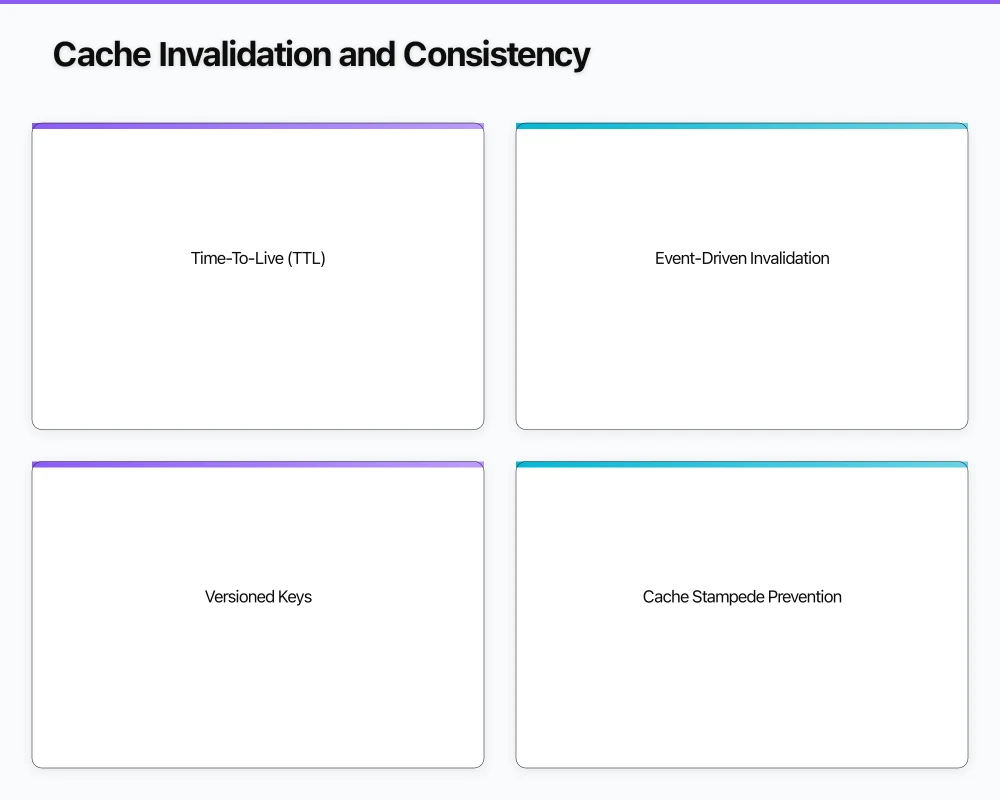
Write-Through Caching writes data to both the cache and the database simultaneously on every update. This ensures that the cache always contains the most current data, eliminating the stale data issue that plagues cache-aside patterns. However, write-through adds latency to every write operation (the write is not complete until both the cache and database are updated) and loads the cache with data that may never be read.
Write-Behind (Write-Back) Caching writes data to the cache immediately and asynchronously writes to the database in the background. This provides extremely fast write performance but introduces the risk of data loss if the cache fails before the background write completes. For use cases where write performance is critical and brief data loss is acceptable (session state, view counters, non-financial metrics), write-behind provides significant performance advantages.
Read-Through Caching integrates the cache with the data source so that cache misses automatically trigger data loading without application intervention. The cache itself manages the relationship with the underlying data store. This pattern simplifies application code but requires cache infrastructure that supports data source integration — a capability that Redis does not natively provide but that cache abstraction layers like Spring Cache or application-level libraries can implement.
For most enterprise applications, cache-aside provides the best balance of simplicity, flexibility, and performance. Write-through is appropriate for data that is read frequently and must always be current. Write-behind is appropriate for high-write workloads where eventual consistency is acceptable.
Redis Architecture at Enterprise Scale
Redis provides an exceptional foundation for enterprise caching, combining sub-millisecond latency, rich data structures (strings, hashes, lists, sets, sorted sets, streams), and operational maturity. Architecting Redis for enterprise scale requires decisions about deployment topology, persistence, high availability, and data management.
Redis Sentinel provides high availability through automatic failover. A Sentinel cluster monitors Redis master and replica instances, detecting master failures and promoting replicas automatically. For enterprise deployments, a minimum of three Sentinel instances (to achieve quorum) monitors a master-replica topology. Sentinel provides monitoring, notification, automatic failover, and configuration provider capabilities.
Sentinel is appropriate for deployments where a single Redis instance (with replicas for availability) provides sufficient capacity. The capacity ceiling is the memory and throughput of a single master instance, as all writes go to the master and are replicated to replicas.
Redis Cluster provides horizontal scaling by distributing data across multiple Redis nodes using hash slot assignment. Data is automatically partitioned across 16,384 hash slots distributed across master nodes, with each master having one or more replicas for availability. Redis Cluster provides automatic failover within partitions and transparent data routing — clients can connect to any node and be redirected to the node holding the requested data.
Redis Cluster is appropriate when data volume or throughput exceeds single-instance capacity. The trade-offs include increased operational complexity, limitations on multi-key operations (operations spanning multiple hash slots require careful design), and more complex client configuration.
Managed Redis Services (Amazon ElastiCache for Redis, Azure Cache for Redis, Google Cloud Memorystore) eliminate operational overhead by providing managed deployment, scaling, patching, and monitoring. For enterprises prioritising operational simplicity, managed services provide the fastest path to production Redis with enterprise-grade availability and security.
The strategic choice between self-managed and managed Redis depends on the organisation’s operational capabilities, cost sensitivity, and customisation requirements. Managed services cost more per instance but eliminate operational labour; self-managed Redis is cheaper at scale but requires dedicated expertise.
Cache Invalidation and Consistency
Cache invalidation — the second hardest problem in computer science after naming things — is the central challenge of enterprise caching architecture. When underlying data changes, cached data becomes stale, and stale data can produce incorrect business outcomes.
Time-To-Live (TTL) is the simplest invalidation mechanism. Each cached entry expires after a configured duration, and subsequent requests trigger a fresh load from the data source. TTL provides eventual consistency bounded by the TTL duration — data is never more stale than the TTL value. Setting appropriate TTLs requires understanding the business tolerance for stale data: session data might tolerate minutes of staleness, while pricing data might require seconds.
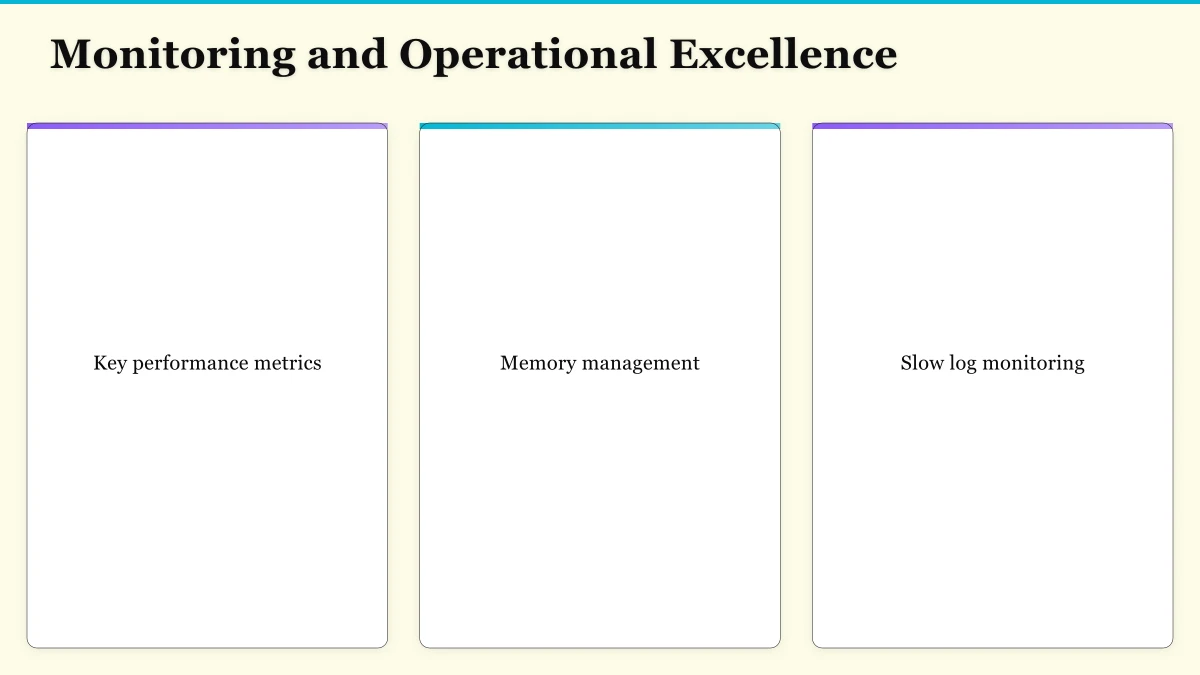
Event-Driven Invalidation uses database change events (from change data capture systems like Debezium or database triggers) to invalidate or update cache entries when underlying data changes. This provides near-real-time consistency without the latency of TTL-based approaches. The complexity is building and maintaining the event pipeline, but for data where freshness is critical, event-driven invalidation is worth the investment.
Versioned Keys include a version identifier in the cache key, which changes when the underlying data changes. Rather than invalidating old entries, the application simply reads from the new key, and old entries expire naturally through TTL. This pattern avoids the race conditions that can occur with explicit invalidation and is particularly effective for read-heavy workloads.
Cache Stampede Prevention addresses the scenario where a popular cache entry expires and hundreds of concurrent requests simultaneously attempt to reload the data from the database, potentially overwhelming it. Techniques include request coalescing (only one request loads the data, others wait for the result), probabilistic early expiration (some requests refresh the cache before the TTL expires), and lock-based loading (using Redis distributed locks to ensure only one process loads the data).
Monitoring and Operational Excellence
Enterprise Redis deployments require comprehensive monitoring to maintain performance and availability.
Key performance metrics include hit rate (the percentage of requests served from cache — target 95%+ for mature caching layers), latency percentiles (p50, p95, p99 response times), memory utilisation (tracking toward capacity limits), eviction rate (entries removed to free memory, indicating capacity pressure), and connection count (approaching limits can cause failures).
Memory management is critical for Redis, which stores all data in RAM. Understanding Redis memory allocation behaviour, configuring appropriate maxmemory policies (LRU, LFU, or random eviction), and monitoring memory fragmentation ratios prevents out-of-memory failures that cascade into system-wide outages.
Slow log monitoring identifies commands that exceed performance thresholds, helping detect problematic access patterns (large key scans, oversized data structures, blocking operations) before they impact application performance.
Conclusion
Enterprise caching architecture with Redis is a strategic capability that transforms system performance, reduces infrastructure costs, and enables the responsiveness that modern applications demand. The investment in proper architecture — selecting appropriate caching patterns, deploying Redis with enterprise-grade availability, implementing effective cache invalidation, and monitoring comprehensively — pays dividends across every application that leverages the caching layer.
For CTOs evaluating caching strategy in 2022, Redis is the clear market leader for in-memory caching, and the managed service options from major cloud providers reduce the operational barrier to adoption. The strategic advice is to invest in caching architecture as a shared capability rather than leaving it to individual teams, establish patterns and libraries that embed best practices, and monitor caching performance as rigorously as database performance.
Strategy needs execution. Cloud Geeks publishes practical cloud computing and cybersecurity guides for Australian businesses ready to act.
Ash Ganda is the founder of Ganda Tech Services, a Sydney-based technology consultancy delivering cloud, web, and mobile solutions for Australian businesses.
About the Author
Ashish Ganda is the founder of Ganda Tech Services, a Sydney-based technology consultancy specialising in cloud infrastructure, web development, and mobile app solutions for Australian businesses.
Digital Transformation Roadmap 2026
A 12-month framework for Australian SMBs ready to modernise — phases, tools, and milestones.
Almost done
Check your inbox and click the confirmation link to get your download.