The Three Keys That Unlock Everything: A CTO's Framework for Identity Risk
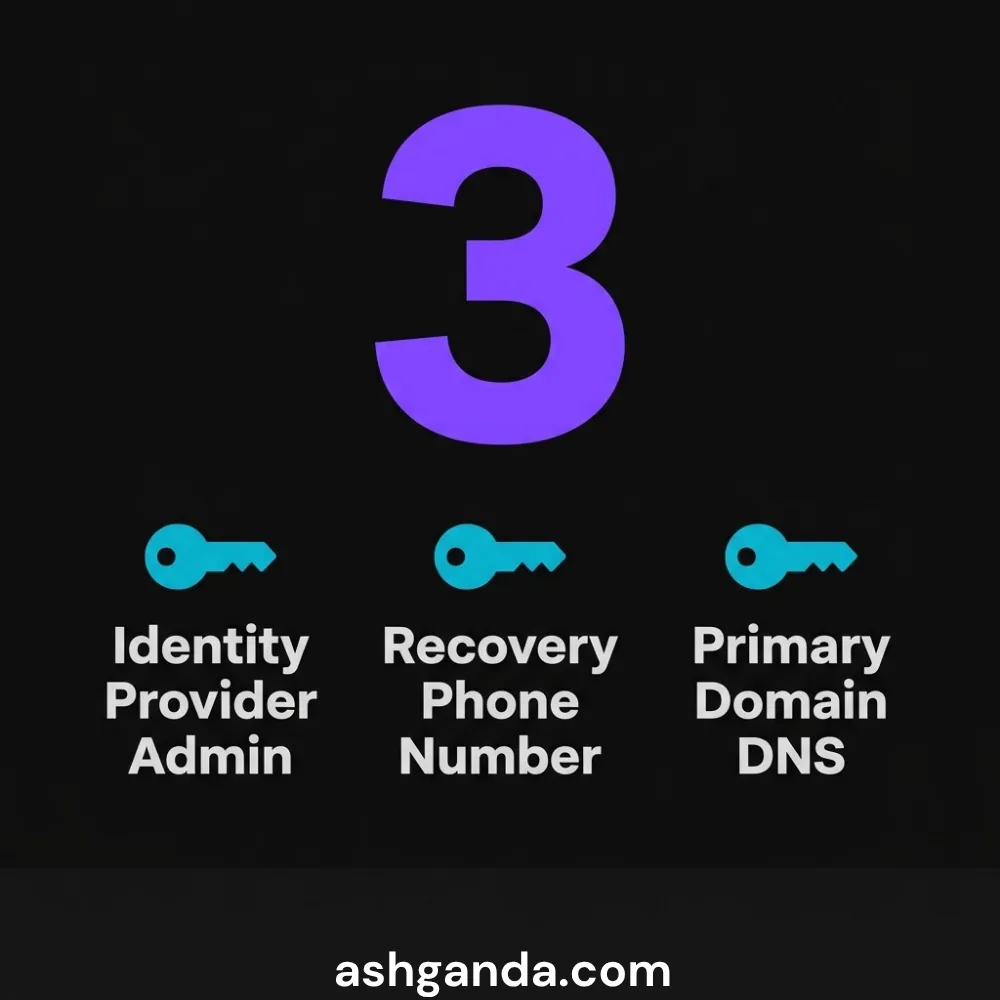
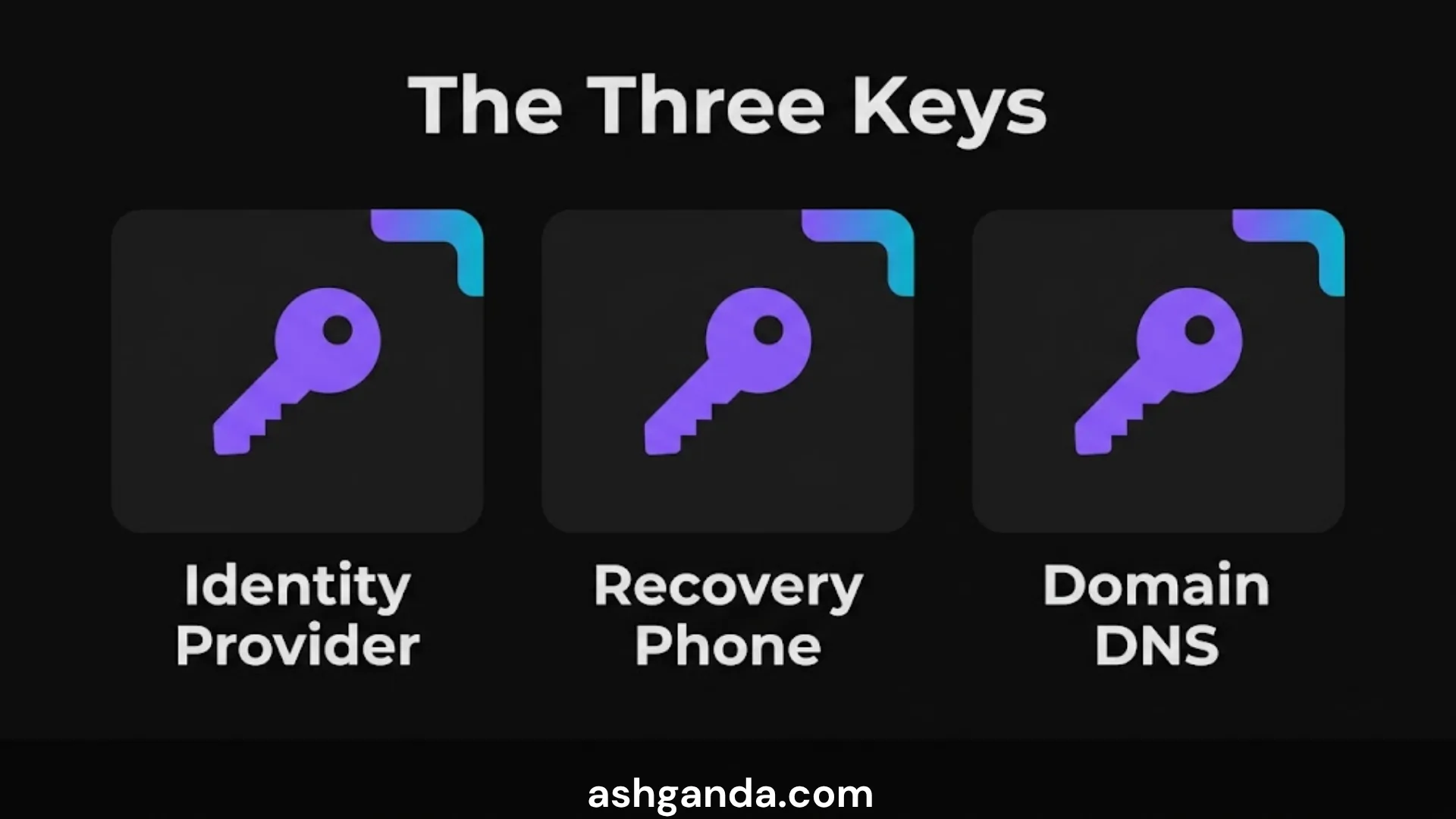
Every enterprise security architecture I’ve reviewed eventually reduces to the same three credentials. Not three categories — three specific things. The identity provider admin account. The phone number tied to account recovery. The primary email domain’s DNS control. Compromise any one of them, and every other control an organisation has built — network segmentation, endpoint detection, SOC monitoring, the whole stack — becomes something an attacker routes around rather than through.
This isn’t a theoretical framing exercise. It’s the same test I run on my own infrastructure before I run it on anyone else’s, because our AI content pipeline publishes roughly 22 posts a month across seven sites, fully automated, and a single compromised credential in that chain doesn’t just leak data — it publishes under our name, at scale, before anyone notices.
Why These Three, Specifically
Most enterprise security spend goes toward defending the perimeter of the network. That perimeter mostly doesn’t exist anymore — workloads span multiple clouds, staff work from anywhere, and SaaS applications sit entirely outside any network boundary an organisation controls. What remains as the actual perimeter is identity: who can authenticate as who, and what that authentication unlocks.
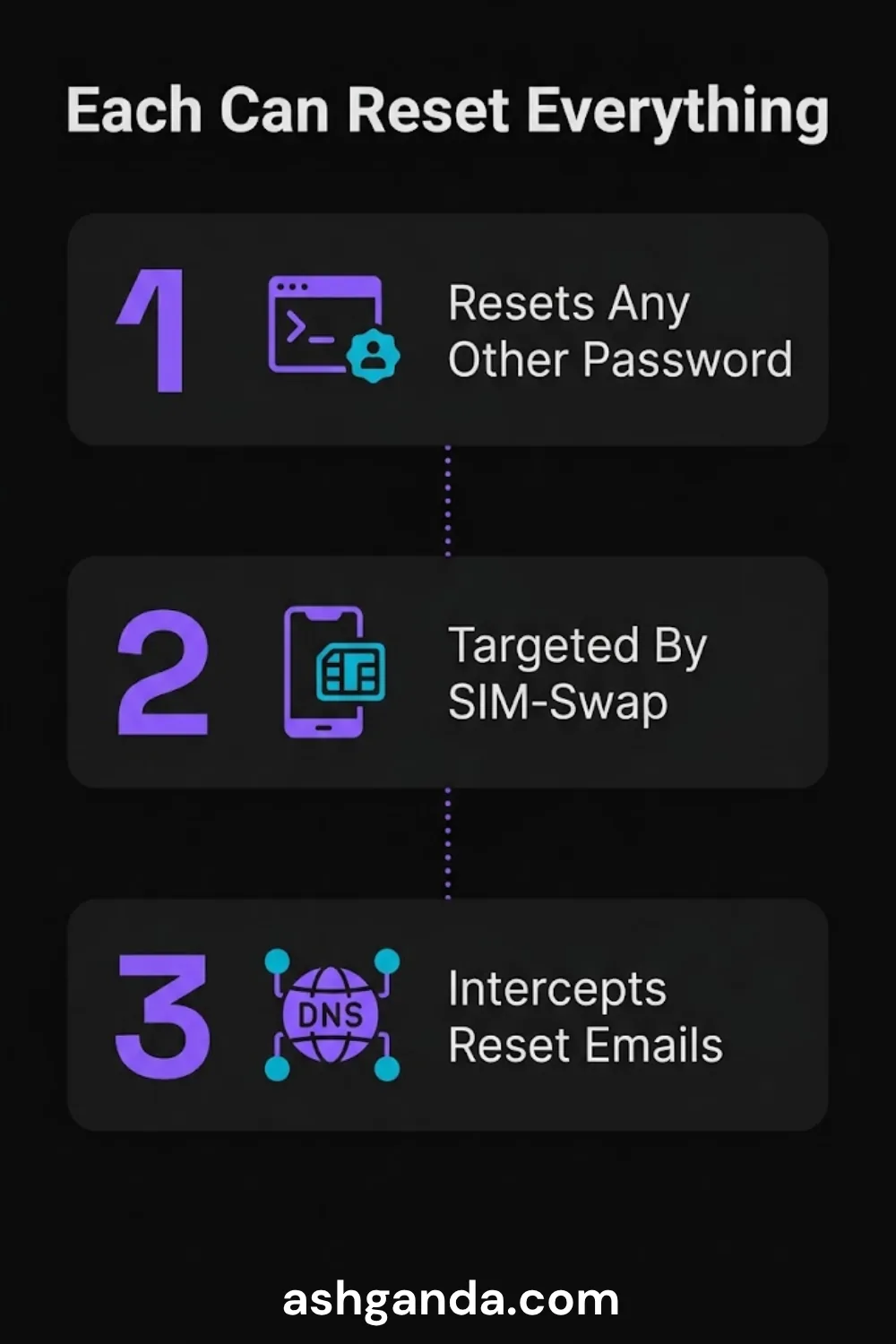
Within identity, three specific credentials sit above every other one, because they can each independently reset or bypass the others:
The identity provider admin account (Entra ID, Okta, Google Workspace admin, or equivalent). This is the account that can reset any other user’s password, disable any other MFA enrollment, and provision new admin accounts. Compromising it doesn’t require breaching individual applications — it requires breaching one console.
The recovery phone number tied to that admin account and to the organisation’s primary domain registrar. SIM-swap attacks exist specifically because phone-based recovery is the weakest link most organisations still permit as a fallback, and attackers target the phone carrier, not the enterprise, to get it.
Primary email domain DNS control. Whoever controls DNS controls where the organisation’s email actually routes. A hijacked domain doesn’t just redirect a website — it silently intercepts every password reset email sent to anyone at the organisation, for every service that uses email-based recovery.
The Architectural Mistake This Framework Corrects
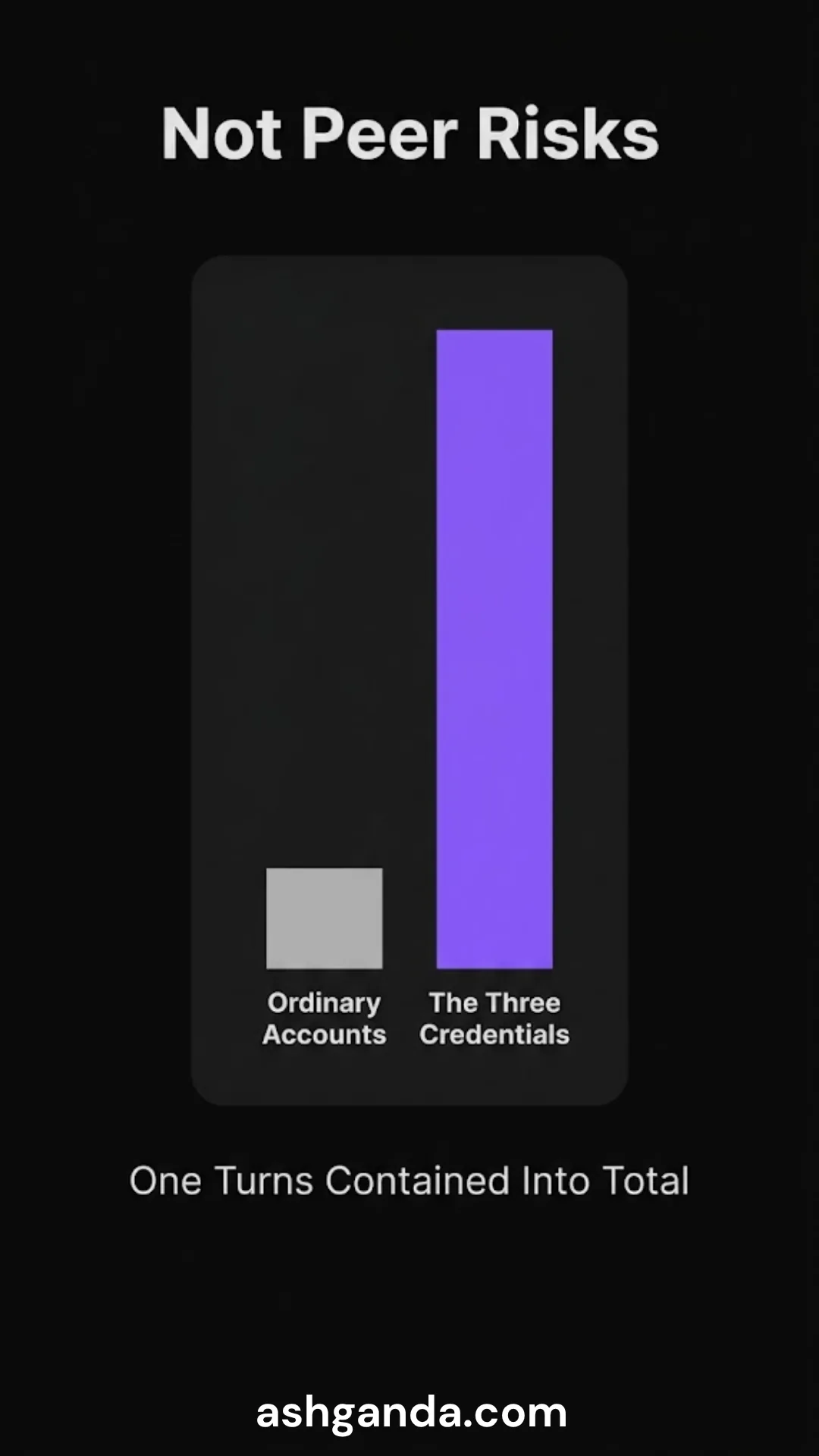
The standard enterprise security model treats these three credentials as three among many — protected by the same MFA policy, the same access review cadence, the same incident response runbook as everything else. That’s the architectural error. These three deserve a materially different tier of protection than the rest of the identity estate, because they’re not peer risks to a compromised marketing SaaS account — they’re the risk that turns every other compromise from contained to total.
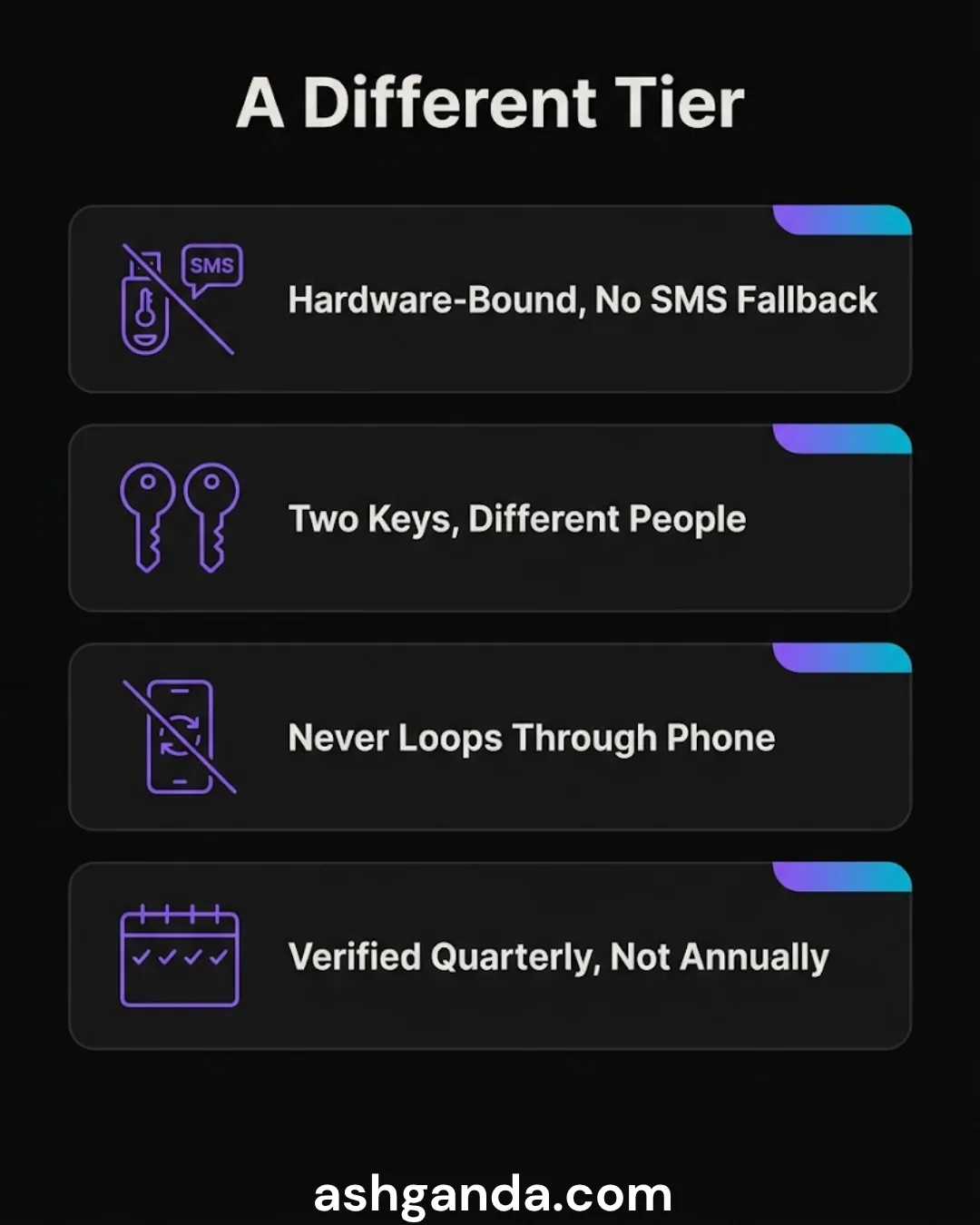
In practice, that different tier looks like:
- Hardware-bound, phishing-resistant authentication (FIDO2 security keys) as the only accepted method — no SMS fallback, no authenticator-app fallback, because a fallback is only as strong as its weakest option.
- A minimum of two physical keys per credential, held by different people, in different locations — a single point of physical failure is still a single point of failure.
- Recovery paths that don’t loop back through the phone number — the exact channel SIM-swap attacks exploit, and the one most organisations still permit as a “just in case” fallback for their most critical accounts.
- Quarterly verification, not annual — confirming the backup key still works, the recovery contacts are still current, and nobody who’s left the organisation still has a registered credential.
The Governance Failure Mode, and Why I Trust This Framework
The reason I hold this argument with more conviction than most identity strategy content is that I’ve watched the failure mode happen in production, on infrastructure I built. Our automated pipeline includes a fail-closed content gate — I wrote about the specific incident, “Quality Gate Drift,” where the pipeline nearly shipped broken content because a check that looked like it was working had quietly stopped enforcing anything. The fix required manually verifying 644 quotes in one gate-hardening pass to confirm the gate was actually catching what it claimed to catch.
Identity controls fail the same way. A policy that requires MFA “usually” isn’t a policy — it’s a policy with an undocumented exception waiting to be found. The three-credential framework only holds if it’s verified, not assumed, on the same cadence a fail-closed system demands of itself.
What This Looks Like Applied Elsewhere in the Stack
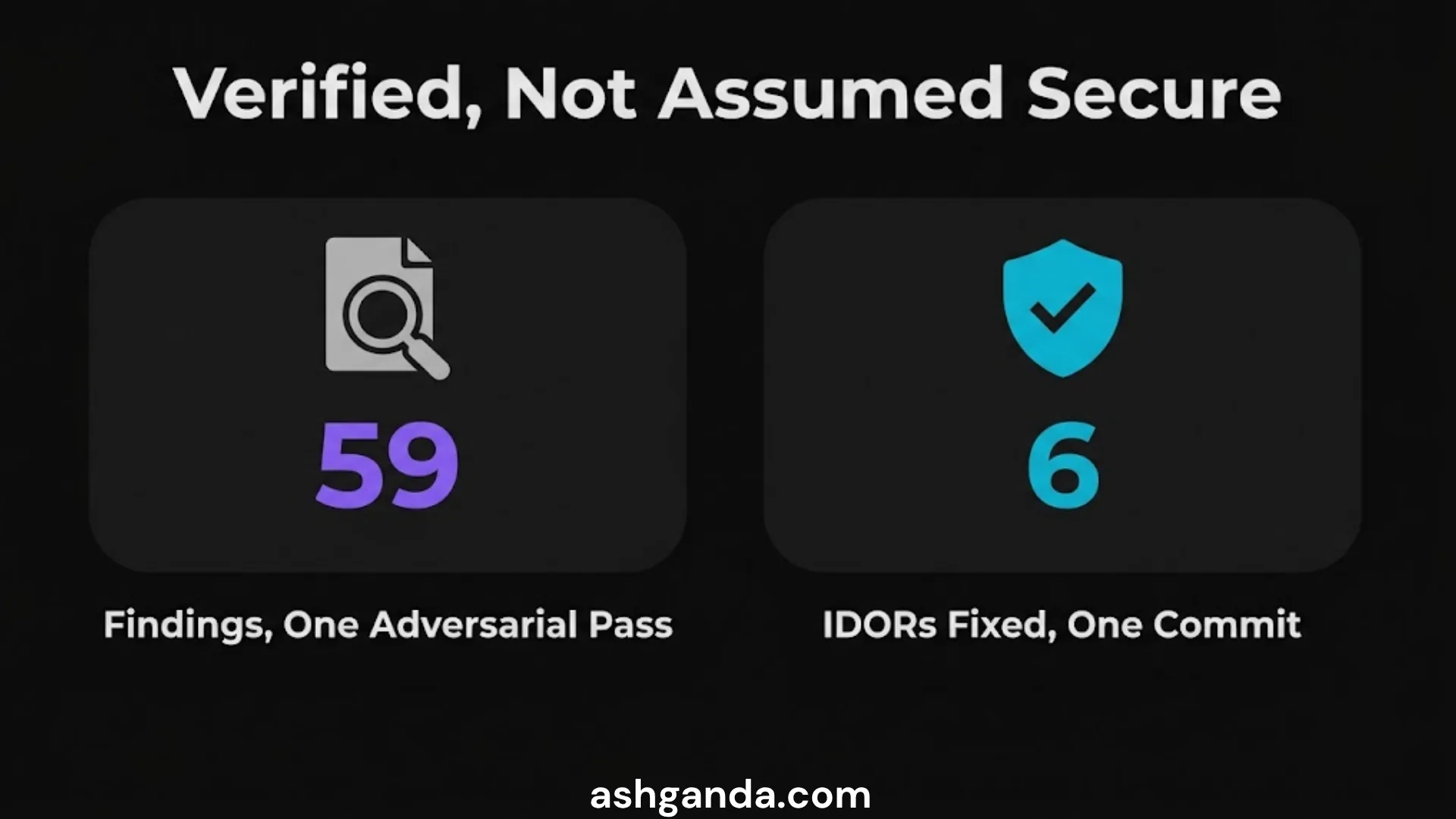
The same discipline shows up wherever access control actually gets tested adversarially rather than just designed. A 1080° adversarial audit across one of our own platforms surfaced 59 findings in a single pass — not because the system was unusually weak, but because adversarial testing finds what design review alone doesn’t. A separate hardening pass on a different codebase fixed six IDOR vulnerabilities alongside MFA takeover, brute-force, and denial-of-service guards in one commit — the kind of finding that only surfaces when someone is actively trying to break the access model, not reviewing it on paper.
The pattern across all of this: identity and access control are never secure by design intent — they’re secure by verified behaviour, checked adversarially, on a schedule. The three-key framework is where that verification effort should concentrate first, because it’s where a single failure has the largest blast radius.
The CTO-Level Takeaway
If your organisation’s security roadmap treats every credential with roughly equal priority, the roadmap is optimising for completeness over actual risk reduction. Identify the specific three — your identity provider admin, your recovery phone number, your primary domain’s DNS control — and give them a materially higher tier of protection than everything else, verified quarterly rather than assumed annually. Everything else on the security roadmap matters less than getting this specific decision right.
Related reading: how much each tier is worth spending on.
Frequently Asked Questions
Are these literally always the same three credential types across every organisation? The categories are consistent — identity provider admin, phone-based recovery, and DNS/domain control — though the specific systems vary (Okta vs Entra ID, a specific registrar, a specific carrier). The framework is in identifying which of your organisation’s actual accounts fall into each category, not assuming a generic list applies unchanged.
Why single out phone-based recovery specifically, rather than treating all MFA methods as roughly equivalent? Because SIM-swap and phone-porting attacks target the telecom carrier, not the enterprise’s own security controls — an organisation can do everything else correctly and still be compromised through a channel it doesn’t control at all. This asymmetry is why phone-based recovery deserves explicit elimination from Tier 1 accounts, not just a lower preference ranking.
Does this framework replace a broader zero trust architecture, or sit inside one? It sits inside one, as the highest-priority subset. Zero trust’s broader identity-centric approach verifies every access request regardless of network location; this framework says specifically where to spend the first and most disproportionate share of that verification effort.
How do you verify these controls are actually working, rather than just configured? The same way any fail-closed system should be verified — adversarial testing, not design review. Attempt the compromise path yourself (or have a red team do it) on a schedule, the same way you’d test a backup by actually restoring from it.
What’s the single highest-leverage first step for an organisation that has none of this formalised today? Identify your actual three accounts this week, and eliminate SMS/phone-based recovery as a fallback option on all three, replacing it with hardware-bound authentication. That one change closes the most common real-world compromise path faster than any broader initiative.
Digital Transformation Roadmap 2026
A 12-month framework for Australian SMBs ready to modernise — phases, tools, and milestones.