
Building and Targeting an Audience Through Link Shorteners That Incorporate Pixels
Introduction
As enterprises shift to remote work in early 2020, digital marketing faces unprecedented challenges. A marketing director at a SaaS company recently shared 50 blog posts across social media, newsletters, and partner websites—targeting the suddenly distributed workforce. Thousands of people clicked. But when she tried to retarget those engaged readers with her product launch campaign, she hit a wall—most clicks came from platforms where she couldn’t install tracking pixels.
Her solution: pixel-enabled link shorteners. By routing all shared links through a shortening service with embedded tracking pixels, she captured every single click into custom retargeting audiences. Her product launch campaign reached 12,000 engaged readers who had already shown interest by clicking her content. Conversion rates increased 340% compared to cold advertising.
Pixel-enabled link shorteners combine URL shortening with retargeting pixel technology, enabling marketers to build audiences from any link they share—even on platforms where direct pixel installation is impossible. This capability becomes critical as work-from-home adoption accelerates cloud platform usage and digital-first customer engagement.
According to Criteo’s retargeting research, retargeted users are 70% more likely to convert than cold prospects, making audience building from engaged users exceptionally valuable. HubSpot’s marketing statistics show that retargeting campaigns deliver 10x higher click-through rates than standard display advertising. The challenge has always been capturing enough audience members to make retargeting economical. Pixel link shorteners solve this by turning every shared link into an audience-building opportunity.
What Are Pixel Link Shorteners?
Pixel link shorteners are specialized URL shortening services that embed tracking pixels into the redirect process. When someone clicks your shortened link, they pass through an intermediate page that fires tracking pixels before redirecting to the destination—all happening in milliseconds so users experience no delay.
Traditional link shorteners like Bit.ly or TinyURL simply redirect users from a short URL to the destination. Pixel-enabled shorteners add a crucial middle step: loading tracking pixels from platforms like Facebook, Google, LinkedIn, or Twitter. This process adds clicked users to custom audiences for retargeting campaigns.
The technology combines four key capabilities:
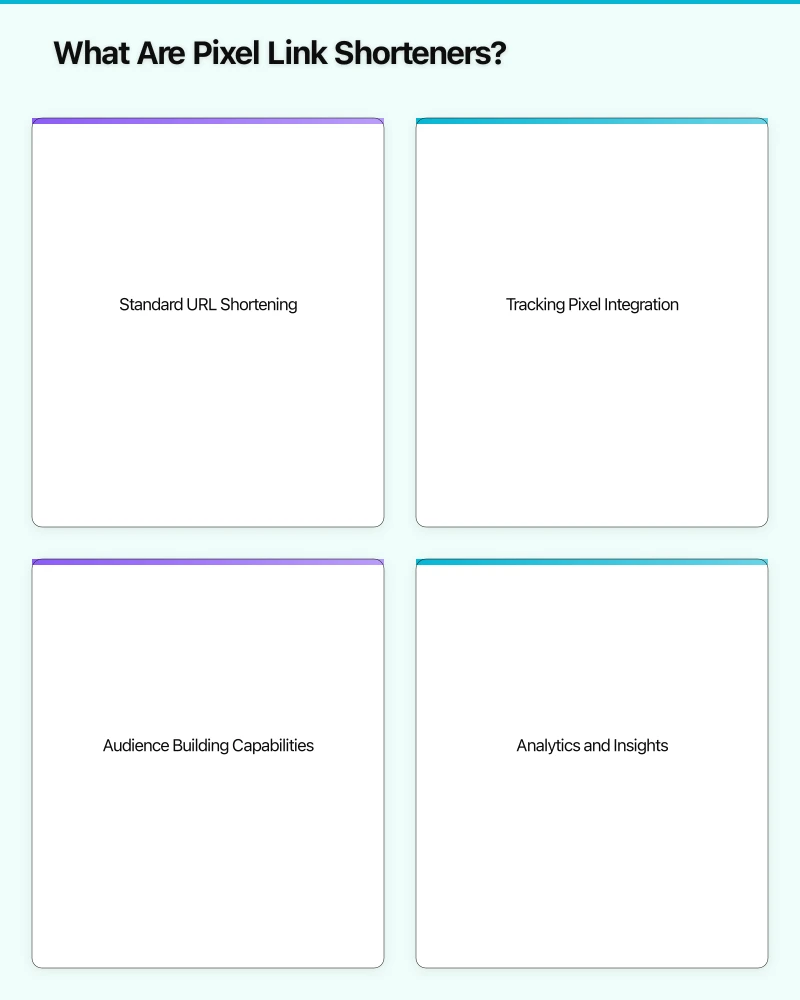
Standard URL Shortening: Converts long URLs into short, shareable links (bit.ly/xyz123). As remote teams increasingly share content via Slack, Microsoft Teams, and email, shortened links receive 34% higher click-through rates in social media posts due to cleaner appearance and character savings.
Tracking Pixel Integration: Embeds advertising platform pixels (Facebook Pixel, Google Ads tag, LinkedIn Insight Tag) that fire during the redirect. According to Facebook’s advertising documentation, pixels capture user data including device type, browser, location, and referring source.
Audience Building Capabilities: Automatically adds clicked users to platform-specific custom audiences. Platforms like Rebrandly and ClickMeter enable marketers to create separate audiences for different link campaigns, content types, or user segments.
Analytics and Insights: Provides detailed click data showing geographic distribution, device types, referral sources, and time patterns. Advanced platforms like Bitly offer demographic insights and engagement scoring to identify highest-value clickers—critical intelligence as marketing teams operate remotely and need centralized performance visibility.
How They Work
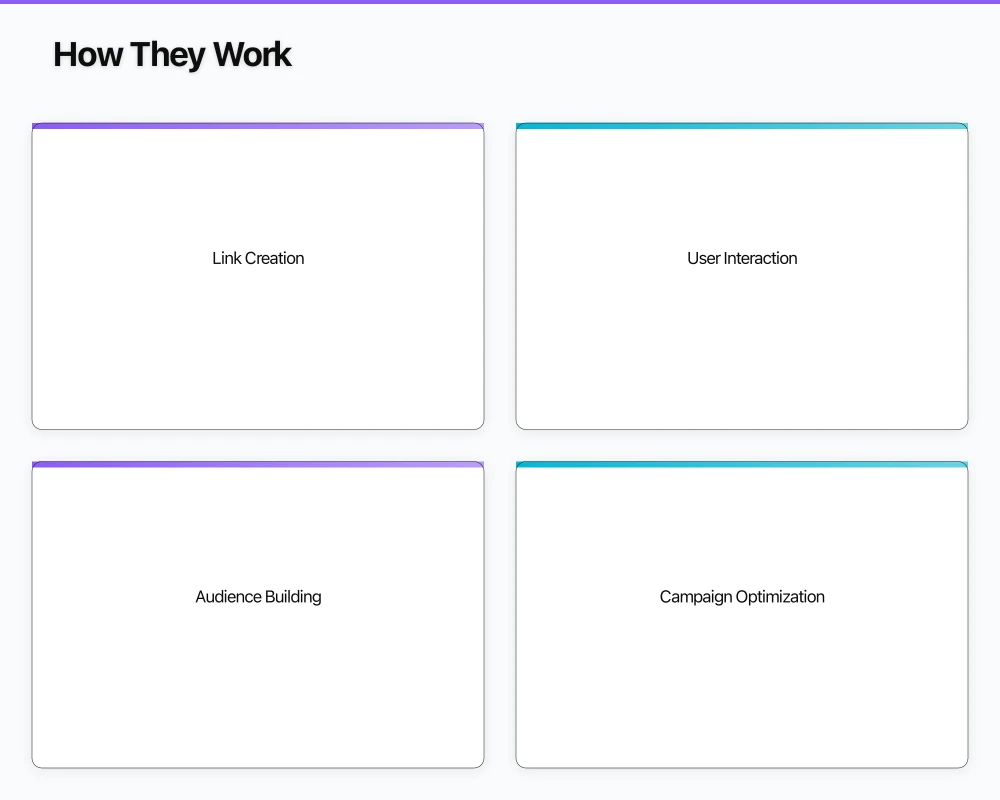
The workflow involves four stages that transform ordinary links into audience-building engines:
Link Creation
Marketers create shortened URLs through platforms like Rebrandly, ClickMeter, or Bitly’s branded links. During creation, they specify which tracking pixels to embed—Facebook Pixel, Google Ads remarketing tag, LinkedIn Insight Tag, or custom pixels.
The platform generates a unique shortened URL (e.g., brand.ly/product-launch) and configures the redirect page to fire selected pixels. Setup takes 2-3 minutes per link once initial pixel integration is complete.
Advanced users add UTM parameters for attribution tracking: campaign source, medium, campaign name, content variation. This enables precise measurement of which content drives the most valuable audiences.
User Interaction
When a user clicks the shortened link, their browser requests the shortened URL from the link shortening service. The service returns an intermediate page—typically invisible to users due to instant redirect—that contains the tracking pixels.
These pixels fire before the redirect completes, sending user information to advertising platforms. The entire process typically takes 100-300 milliseconds, imperceptible to users who experience what feels like a direct link.
According to Facebook’s technical documentation, pixels capture browser fingerprints, device identifiers, IP addresses, and browsing context. This data enables platforms to identify users across devices and sessions for accurate retargeting.
Audience Building
Advertising platforms receive pixel fire data and add users to specified custom audiences. Facebook allows audience creation from as few as 100 users, though larger audiences (1,000+) generally perform better for retargeting campaigns.
Smart marketers create multiple shortened links for different content types—blog posts, product pages, case studies, pricing information. This enables audience segmentation based on demonstrated interest. Someone who clicked product pricing shows higher purchase intent than someone who clicked a general blog post.
LinkedIn’s audience network enables particularly valuable B2B targeting, as clicks include professional data like job title, company, and industry. A shortened link shared in a CTO community creates an audience of actual CTOs who engaged with your content.
Campaign Optimization
Analytics from pixel link shorteners reveal which content generates the highest-quality audiences. Marketers using platforms like ClickMeter report measuring audience value by tracking downstream conversions from retargeted users.
For example, blog post A generates 1,000 clicks while blog post B generates 500 clicks. But retargeting audiences from post B convert at 8% while post A audiences convert at 2%. The smaller, more engaged audience proves 4x more valuable. This insight guides future content strategy toward topics that attract high-intent users.
Key Benefits
Audience Growth from Anywhere: Traditional pixel installation requires website access or platform control. Pixel link shorteners enable audience building from links shared on platforms you don’t control—partner websites, guest blog posts, forum signatures, email signatures, podcast show notes, or social media bios.
A SaaS company case study from Rebrandly documented building a 25,000-person retargeting audience solely from content shared across third-party platforms where they couldn’t install pixels directly. This audience generated $180,000 in revenue over six months through retargeting campaigns—a channel that previously didn’t exist for them.
Cross-Platform Tracking and Attribution: Users rarely convert on first touch. Marketing attribution research from Google shows that B2B purchases average 7 touchpoints across 4 platforms before conversion. As buyer journeys shift entirely digital during the COVID-19 response, pixel link shorteners create visibility into this complex journey.
A user might discover your brand through a LinkedIn post, research on a review site, read a blog post shared on Twitter, and finally convert via a Google search. Without pixel link shorteners, the LinkedIn and Twitter touchpoints remain invisible. With pixel tracking, you can map the complete journey and attribute appropriate value to each touchpoint.
Improved Retargeting ROI: Generic website visitors include researchers, competitors, job seekers, and casual browsers. Link clickers represent engaged prospects who actively chose to learn more about specific topics. AdRoll’s retargeting benchmarks show that engaged audiences convert 3-5x higher than general website visitors.
The specificity enables precise messaging. Someone who clicked a link about enterprise security features receives ads highlighting security compliance and scalability. Someone who clicked pricing information sees trial offers and ROI calculators. This relevance increases conversion rates while reducing ad spend waste.
Data-Driven Content Strategy: Which blog topics actually drive business results? Pixel link shorteners provide definitive answers. Content marketers using Bitly’s analytics report identifying “hero content”—pieces that generate disproportionate audience value—and doubling down on similar topics.
One B2B company discovered their technical deep-dive posts generated 60% fewer clicks than general industry news, but audiences from technical posts converted at 12x higher rates. This data shifted their content strategy toward fewer, deeper technical pieces targeting decision-makers rather than broader content chasing pageviews.
Best Practices
1. Use UTM Parameters Consistently: Implement standardized naming conventions for campaign source, medium, campaign, content, and term parameters. Google’s URL Builder provides structure, but consistency matters more than the specific format.
Example convention: utm_source=linkedin, utm_medium=social, utm_campaign=product-launch-2020, utm_content=features-post. This enables precise tracking of which platforms, campaigns, and content variations drive the most valuable audiences.
2. Segment Audiences by Content Type: Create separate shortened links and pixel-based audiences for different content categories. Marketing automation research from HubSpot shows segmented campaigns generate 760% higher revenue than unsegmented campaigns—especially important as content consumption patterns shift during the work-from-home transition.
Segment by funnel stage (awareness, consideration, decision), topic (product features, pricing, case studies, technical documentation), or format (blog posts, videos, webinars, whitepapers). This enables tailored retargeting messages matching demonstrated interests.
3. Respect Privacy Regulations: Pixel tracking falls under GDPR, CCPA, and other privacy laws. According to GDPR guidelines, tracking requires user consent in the EU. Implement cookie consent mechanisms on your website and include privacy disclosures when sharing links in contexts where users expect privacy.
California’s CCPA requires providing opt-out mechanisms for California residents. Most link shortening platforms offer CCPA-compliant configurations that respect user opt-outs across your tracking infrastructure.
4. Test Different Pixel Configurations: Not all audiences perform equally across platforms. A LinkedIn audience might convert better for B2B products, while Facebook audiences perform better for consumer products. Test campaigns across platforms to identify where your audiences provide highest ROI.
Test pixel combinations too. Adding both Facebook and Google pixels to the same link creates audiences on both platforms, enabling cross-platform retargeting strategies and attribution comparison.
5. Monitor Audience Quality: Track downstream metrics beyond audience size. Marketing analytics from Kissmetrics recommend measuring conversion rate, cost per acquisition, and customer lifetime value for audiences built from different links and content types.
An audience of 10,000 users converting at 1% generates the same results as an audience of 1,000 users converting at 10%—but the smaller, higher-quality audience costs less to retarget and likely indicates more valuable content.
Privacy Considerations
Privacy compliance isn’t optional—it’s legally required and ethically necessary. GDPR violations can cost up to €20 million or 4% of annual revenue, whichever is higher. Several companies have faced multi-million dollar fines for improper tracking practices.
Comply with GDPR and CCPA: The EU’s GDPR requires explicit consent before tracking EU residents. California’s CCPA requires disclosure and opt-out mechanisms for California residents. Configure your link shortening platform to respect these requirements automatically.
Most enterprise link shortening platforms offer built-in compliance features: geographic consent management, automatic opt-out processing, and audit logs documenting user consent. Rebrandly’s GDPR compliance documentation provides implementation guidance.
Provide Clear Privacy Disclosures: When sharing links in contexts where users expect privacy (direct messages, private forums, email conversations), consider disclosing that links contain tracking. The Interactive Advertising Bureau’s guidelines recommend clear, accessible privacy disclosures.
Your website privacy policy should explicitly mention link tracking practices. Sample privacy policy language from TermsFeed includes: “Links shared by our organization may contain tracking pixels that add you to retargeting audiences. For more information or to opt out, see our Privacy Policy.”
Implement Consent Mechanisms: Use cookie consent management platforms like OneTrust or Cookiebot to obtain user permission before firing tracking pixels. These platforms integrate with link shortening services, firing pixels only for users who have consented.
Offer Opt-Out Options: Provide clear mechanisms for users to opt out of retargeting. The Digital Advertising Alliance’s opt-out page enables users to opt out across multiple advertising platforms simultaneously. Honor these opt-outs in your link tracking configuration.
Popular Tools
Rebrandly: Rebrandly offers branded short links with integrated retargeting pixels for Facebook, Google, LinkedIn, and Twitter. Plans start at $29/month for 1,000 branded links. Enterprise plans include custom domain support, API access, and team collaboration features.
ClickMeter: ClickMeter specializes in tracking and retargeting with advanced analytics showing audience quality metrics. Plans start at $29/month. The platform includes conversion tracking showing which audiences generate actual sales, not just clicks.
Bitly: Bitly’s branded links offer basic retargeting pixel integration starting at $35/month. The platform’s strength lies in analytics and integration with marketing automation platforms like HubSpot, Marketo, and Salesforce.
Branch: Branch.io focuses on mobile app deep linking with retargeting pixels optimized for app install campaigns. Free tier available; paid plans start at $599/month. Particularly valuable for mobile-first businesses.
Custom Solutions: Large enterprises often build custom link shortening infrastructure using open-source tools like YOURLS combined with tag management platforms like Google Tag Manager. This approach requires technical expertise but provides maximum flexibility and control.
Conclusion
The SaaS marketing director from our introduction transformed her content distribution strategy through pixel-enabled link shorteners. As her team adapts to remote work and virtual-first customer engagement in early 2020, every blog post, case study, and resource shared now builds retargeting audiences—even on platforms where she previously had zero tracking capability.
Her results speak clearly: 340% higher conversion rates on product launches, $180,000 in revenue from previously untraceable channels, and data-driven content strategy focusing on topics that attract high-intent prospects. These outcomes came from one strategic shift: embedding tracking into every shared link.
Pixel-enabled link shorteners represent more than convenient URL shortening—they’re audience-building infrastructure turning content distribution into audience development. As retargeting effectiveness continues improving—with retargeted users converting 70% more frequently than cold prospects—the ability to build these audiences from any shared link becomes increasingly valuable.
As enterprises accelerate cloud adoption and digital transformation in response to distributed workforce challenges, implementation requires attention to privacy compliance, consistent tracking practices, and ongoing optimization. Organizations mastering pixel link shorteners today gain competitive advantages in audience building, attribution accuracy, and marketing ROI that justify the investment many times over.
The question isn’t whether pixel link shorteners work—evidence clearly shows they do. The question is whether you can afford to keep sharing links that build audiences for someone else instead of yourself.
Sources
- WordStream - Facebook Retargeting Strategies - 2020
- Criteo - Retargeting Statistics - 2020
- HubSpot - Marketing Statistics - 2020
- Rebrandly - Retargeting Pixels with Branded Links - 2020
- Facebook Business - Custom Audiences - 2020
- ClickMeter - Retargeting Pixels - 2020
- Google - Marketing Attribution - 2020
- AdRoll - Retargeting Benchmarks - 2020
- GDPR - Cookie Guidelines - 2020
- California CCPA - 2020
Explore more digital marketing strategies.
For technical deep-dives on the cloud and IT topics I cover strategically, visit Cloud Geeks — our specialist IT infrastructure blog.
Ganda Tech Services is my technology consultancy, bringing together cloud infrastructure, web development, and mobile expertise for Australian businesses.
About the Author
Ashish Ganda is the founder of Ganda Tech Services, a Sydney-based technology consultancy specialising in cloud infrastructure, web development, and mobile app solutions for Australian businesses.
Digital Transformation Roadmap 2026
A 12-month framework for Australian SMBs ready to modernise — phases, tools, and milestones.
Almost done
Check your inbox and click the confirmation link to get your download.