The Quiet Lie: When Your Business Systems Report Success While Failing
The most dangerous failure mode in a modern business system is not the one that crashes loudly. It is the one that returns a success code, logs a completion, passes every automated check, and quietly does nothing. The system worked. The outcome did not happen. Nobody noticed.
This is not a software bug. It is a category of organisational design failure. And it is becoming more common as business processes are automated and delegated to systems whose output nobody reads because the system said it was fine.
What a Quiet Lie Looks Like
We ran 2,246 blog posts across four domains over several months. In 90 days, they received 18 Google organic clicks.
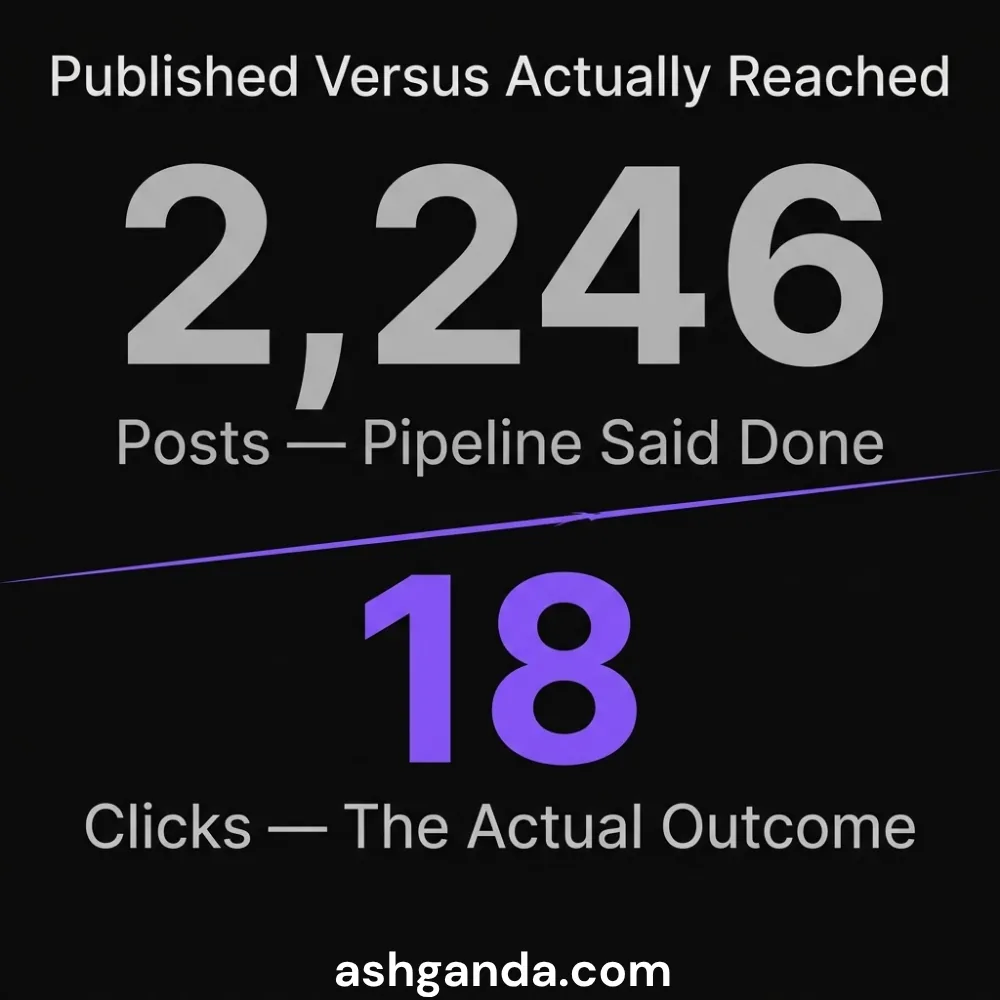
Not per day. Total. Eighteen.
Every post was published successfully. The publishing pipeline exited with code zero. The CMS showed the posts as live. The sitemaps were submitted. Search Console showed the properties as verified. Every automated check passed.
The posts were invisible. The SEO benefit was zero. A configuration error — a canonical tag pointing at the homepage, a trailing slash inconsistency that made every sitemap URL a redirect — had been running quietly behind every successful-looking operation.
The pipeline did not fail. It succeeded at publishing content that could not be found.
The Four Variants
Quiet lies cluster into four patterns. The pattern matters because the fix differs.
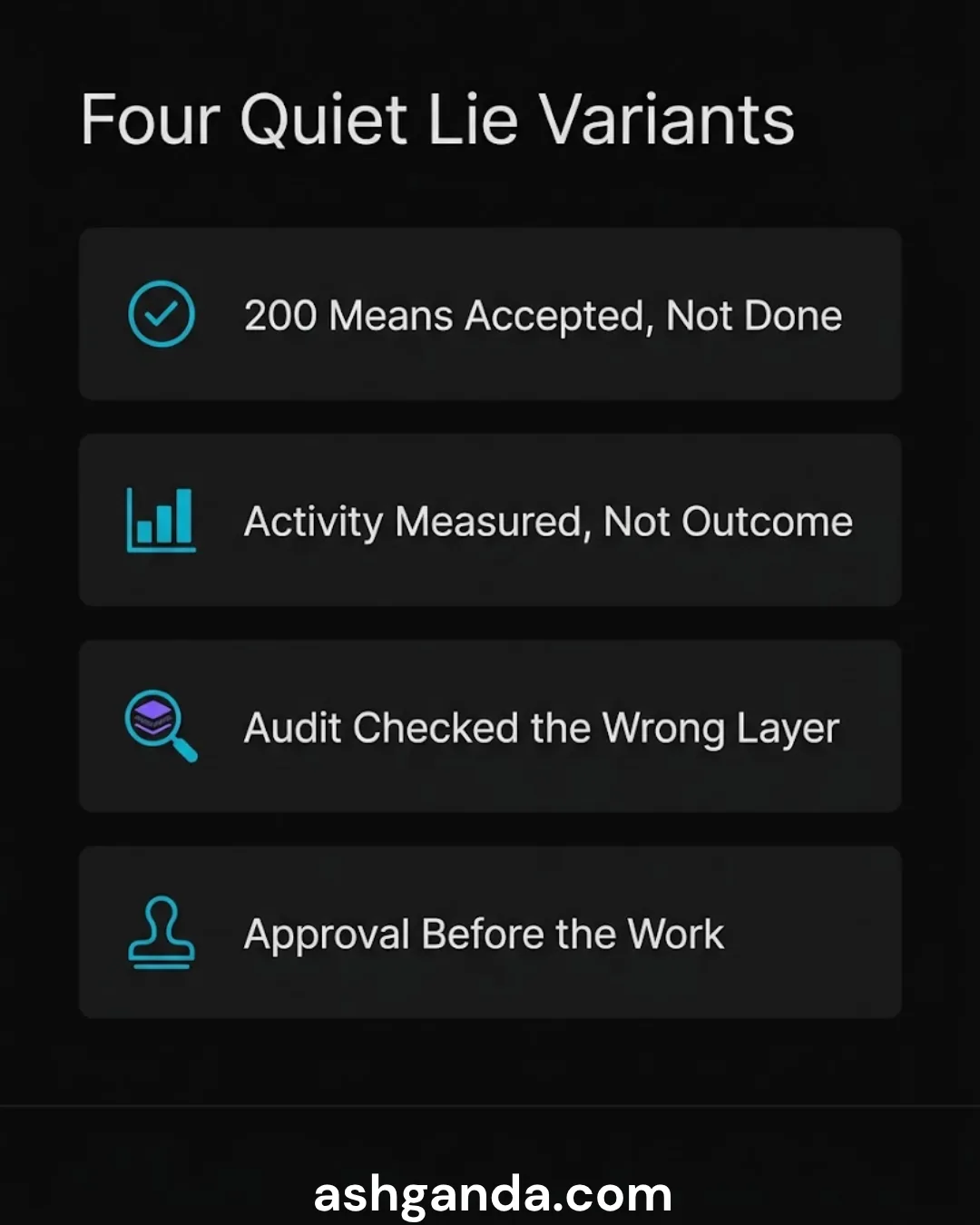
Variant 1: The Success Code That Means “I Accepted the Request”
HTTP 200 does not mean “the thing worked.” It means “the server accepted the request and processed it.” A form submission can return 200 while the data is discarded. An email can be sent successfully while the recipient address is invalid. An analytics event can be recorded successfully while the data goes to the wrong property.
The distinction: success at the protocol level is not success at the outcome level. Systems are routinely designed to confirm the former while never checking the latter.
Variant 2: The Metric That Measures Activity, Not Outcome
A CRM dashboard shows 450 emails sent this month. A marketing report shows 12 blog posts published. A project tracker shows 8 tickets closed.
None of these are outcomes. They are activities. An email sent to a spam folder is still counted as sent. A blog post that is not indexed is still counted as published. A ticket closed without the underlying problem being resolved is still counted as closed.
Activity metrics are easy to generate and easy to game, deliberately or accidentally. Outcome metrics — emails opened and acted upon, posts that received organic visits, problems that did not recur — are harder to measure and are therefore often not measured at all.
Variant 3: The Audit That Checks the Wrong Layer
We checked our website analytics. Traffic was logged. Sessions were recorded. The data was clean and consistent.
The analytics tag was firing correctly. The sessions were real users. The measurement ID in the configuration file was wrong — it matched a development environment, not the production property. Three months of data was going nowhere anyone would look.
All checks passed. The audit confirmed the system was working. The audit was checking whether the tag fired, not whether the tag was sending data to the right place.
This is the most insidious variant. The audit is not wrong. It is checking the thing it was designed to check. The thing it was designed to check is not the thing that matters.
Variant 4: The Validation That Passes Before the Work
A workflow is designed: content is drafted, reviewed, approved, published. The approval step is logged. The approval happened. The approval was given before the content was checked for the properties it was actually approved for.
A staging environment is signed off. The sign-off said “approved.” The test covered visual layout, not functional behaviour. The broken behaviour did not appear until production.
The approval was genuine. The approval was for the wrong thing.
Why This Happens More in Automated Systems
The quiet lie is not new. But it has become structurally more common as:
-
Automation creates distance between action and outcome. When a human submits a form, they can see whether the confirmation page loaded. When an automated pipeline publishes 50 posts, nobody is watching the confirmation page on post 37.
-
Monitoring is designed by the people who built the system. They know what to check. They check what they know. Unknown failure modes are, by definition, unknown to them.
-
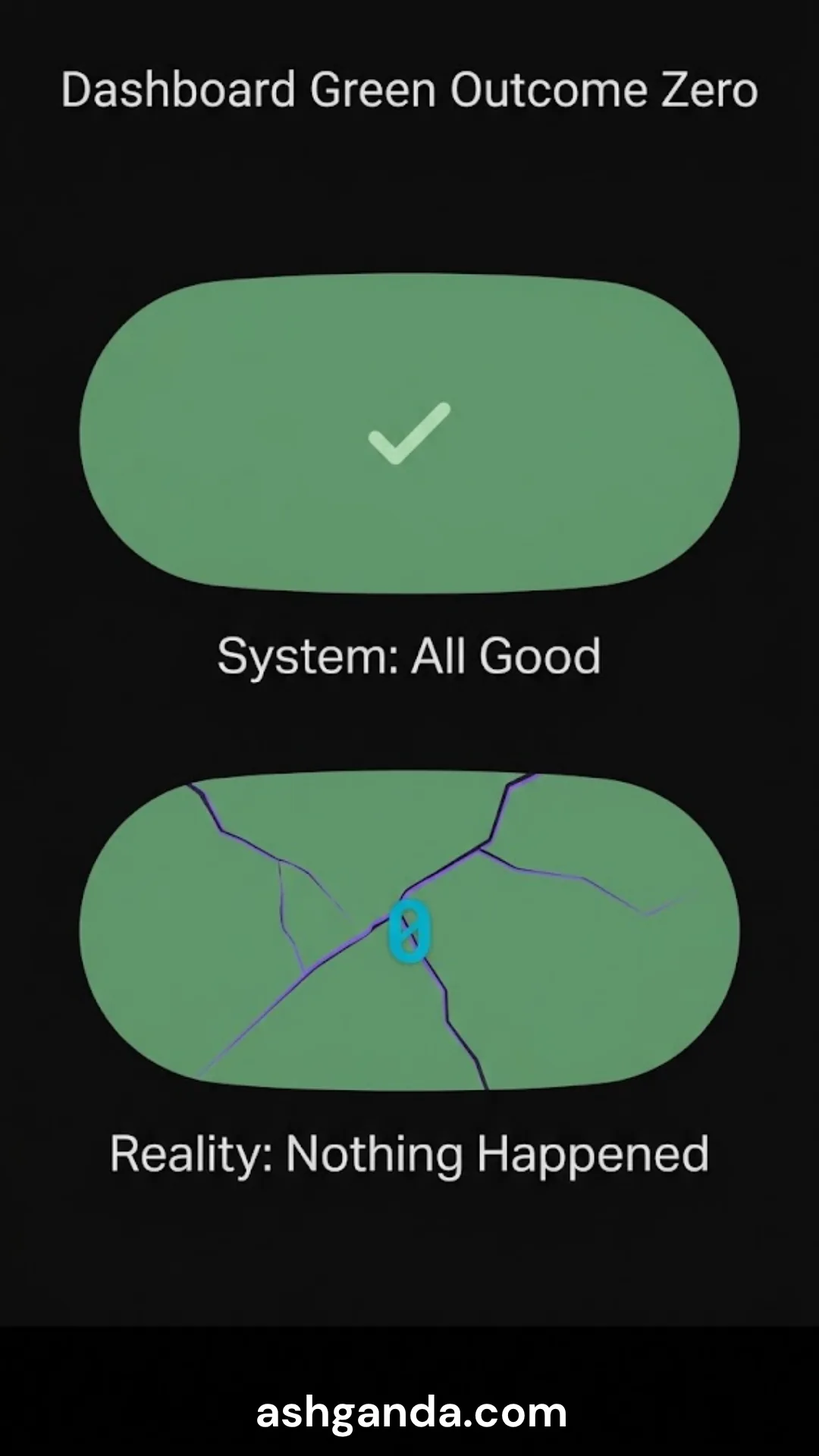
Green is the default state. Most monitoring systems are built to alert on failure. The absence of an alert means the system is working. A system that silently produces the wrong outcome generates no alert. It stays green.
-
Success is logged, not verified. A database write is logged as successful when the write operation completes. It is not logged as unsuccessful when the data written is incorrect or goes to the wrong record.
The Structural Fix
The quiet lie cannot be fixed by adding more monitoring of the same kind. More checks on whether the system ran do not reveal that the system ran correctly. The fix is a different class of check: verify the outcome, not the operation.
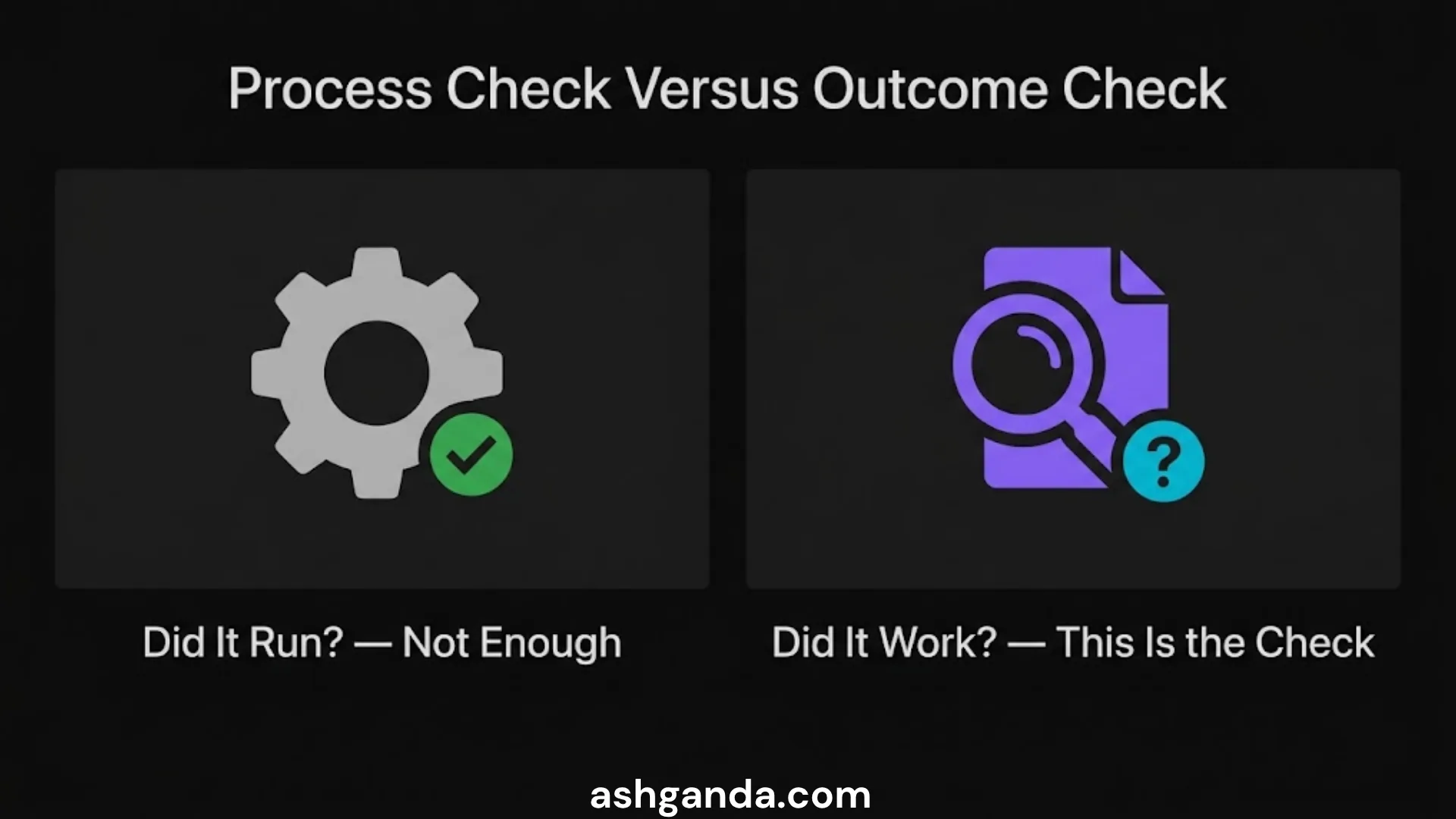
For every automated process, define what the output should look like and check the output directly:
- Not “did the analytics tag fire?” but “is a session appearing in the correct GA4 property?”
- Not “was the post published?” but “does the published URL return 200 and appear in the sitemap?”
- Not “was the email sent?” but “is there a delivery confirmation and open rate above the minimum threshold?”
- Not “did the pipeline exit zero?” but “is the expected row in the database with the expected value?”
This is outcome verification, not process verification. It is slower, more complex, and more expensive to build. It is also the only check that catches a quiet lie.
A Practical Audit Framework
For any automated process you run — content publishing, email campaigns, data pipelines, form submissions, analytics — answer these five questions:
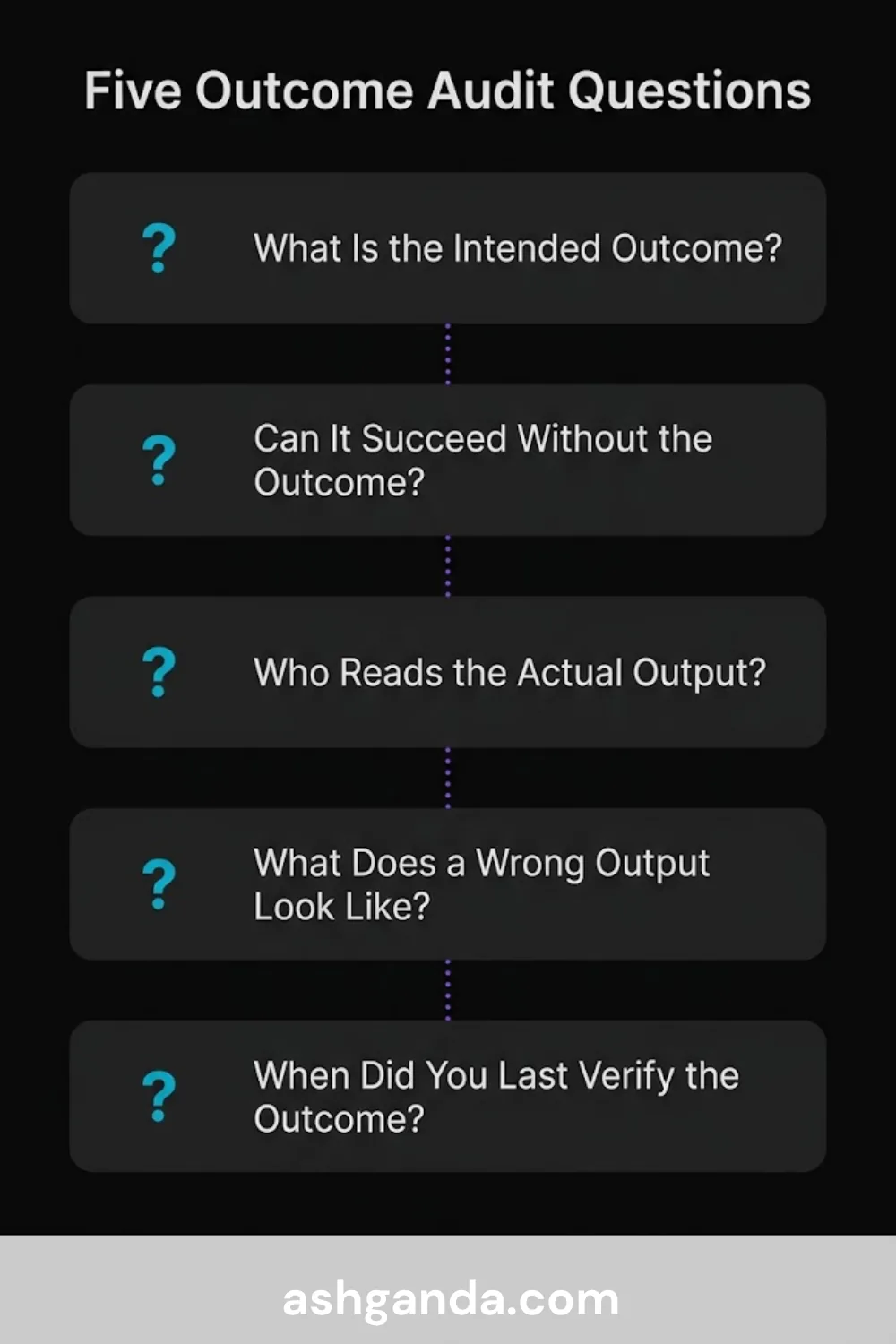
1. What is the outcome this process is supposed to produce? Name it specifically and measurably. “Publish content” is not an outcome. “A URL that returns 200, appears in the sitemap, has a correct canonical, and receives at least one search impression within 30 days” is an outcome.
2. Can the system produce a success signal without producing the outcome? If yes, the success signal is a process check, not an outcome check. Build an outcome check.
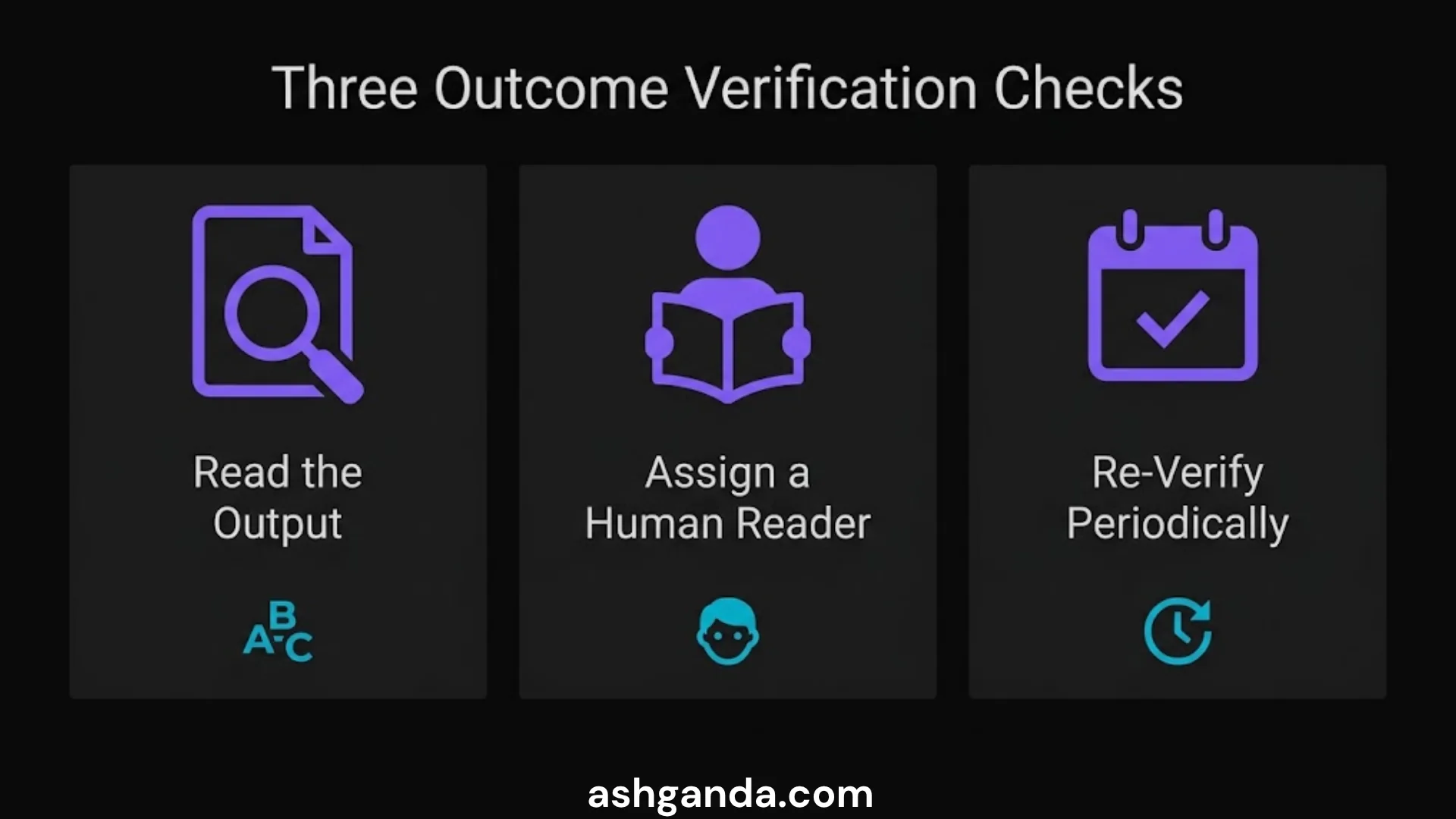
3. Who reads the output? If nobody reads the output — if the only check is that the process ran — you have a quiet lie risk. Assign someone to look at a sample of the actual output periodically.
4. What does a wrong output look like? Design the outcome check to detect wrong outputs, not just absent outputs. An analytics tag firing to the wrong property looks like success on every process check.
5. When did you last verify the outcome, not just the process? If the answer is “when we built it”, that is the answer that matters. Systems drift. Outcome verification catches drift; process verification does not.
What Changes When You Name It
Most organisations do not lack the technical capability to run outcome checks. They lack the habit of asking whether their success signals are actually measuring success.
The quiet lie is comfortable. It produces green dashboards and passed audits. It requires no difficult conversations. The problem is invisible until it surfaces as a consequence — 18 clicks from 2,246 posts, three months of analytics data in a development property, a campaign with 100% delivery rate and 0% conversions.
Name the failure mode, and the pattern becomes visible. Ask “could this succeed without producing the outcome?” for every automated process, and a significant fraction will immediately reveal where the checks have been checking the wrong thing.
The dashboard does not lie. The dashboard measures what it was built to measure. That is the problem.
Frequently Asked Questions
What is a “quiet lie” in business systems?
A quiet lie is when a system or process returns a success signal — a log entry, a 200 response, a green dashboard — while the actual intended outcome was not produced. The system completed its task correctly at the process level while failing at the outcome level. Examples: an analytics tag that fires to a test property, a blog post that is published but has a canonical pointing at the homepage, an email sent to an invalid address that returns “delivered.”
How is outcome verification different from process monitoring?
Process monitoring checks that an operation ran — the tag fired, the post was published, the email was sent. Outcome verification checks that the operation produced the correct result — the session appears in the right analytics property, the published URL returns 200 and appears in the sitemap, the email was opened and acted upon. Systems can pass process monitoring while failing outcome verification.
Why are automated systems more prone to quiet lies?
Automation creates distance between action and outcome — nobody watches what happens after the pipeline runs. Monitoring is typically designed by the people who built the system, who check what they know to check. Unknown failure modes are not monitored. And success is the system’s default state — alerts fire on detected failures, not on undetected wrong outcomes.
How do you build an outcome verification check?
Define the specific, measurable outcome the process should produce. Then build a check that reads the actual output and confirms it matches that definition. For a publishing pipeline: fetch the published URL, confirm it returns 200, confirm the canonical matches the URL, confirm it appears in the sitemap. Run this check after every publish, not just when something looks wrong.
AI Strategy Primer for Australian Business Leaders
A practical framework for AI adoption in 2026 — cut through the hype and start with what matters.