Building High-Performing Technology Teams: Beyond Hiring
Introduction
Every CTO wants high-performing teams. Few achieve them consistently. The gap isn’t hiring—many organisations hire excellent individuals who collectively underperform. High performance emerges from conditions that enable it, not just talent that possesses it.
Creating these conditions is leadership work. It requires intentional design, consistent reinforcement, and continuous adjustment. This guide explores what actually makes technology teams perform.
What High Performance Looks Like
Beyond Velocity
High performance isn’t just about speed:
Output Measures
- Delivery of business outcomes
- Quality and reliability
- Innovation and improvement
- Sustainable pace
Team Measures
- Collaboration effectiveness
- Knowledge sharing
- Conflict resolution
- Collective ownership
Growth Measures
- Skill development
- Career progression
- Resilience to change
- Adaptability
A truly high-performing team excels across all dimensions.
Warning Signs of Fake Performance
Hero Culture
- Individual brilliance masks team dysfunction
- Success depends on a few key people
- Burnout among top performers
- Others disengage
Velocity Theatre
- Story points gamed
- Quality sacrificed for speed
- Technical debt ignored
- Releases that require immediate fixes
Happy Path Performance
- Good under normal conditions
- Falls apart under stress
- Unable to handle ambiguity
- Avoids difficult problems
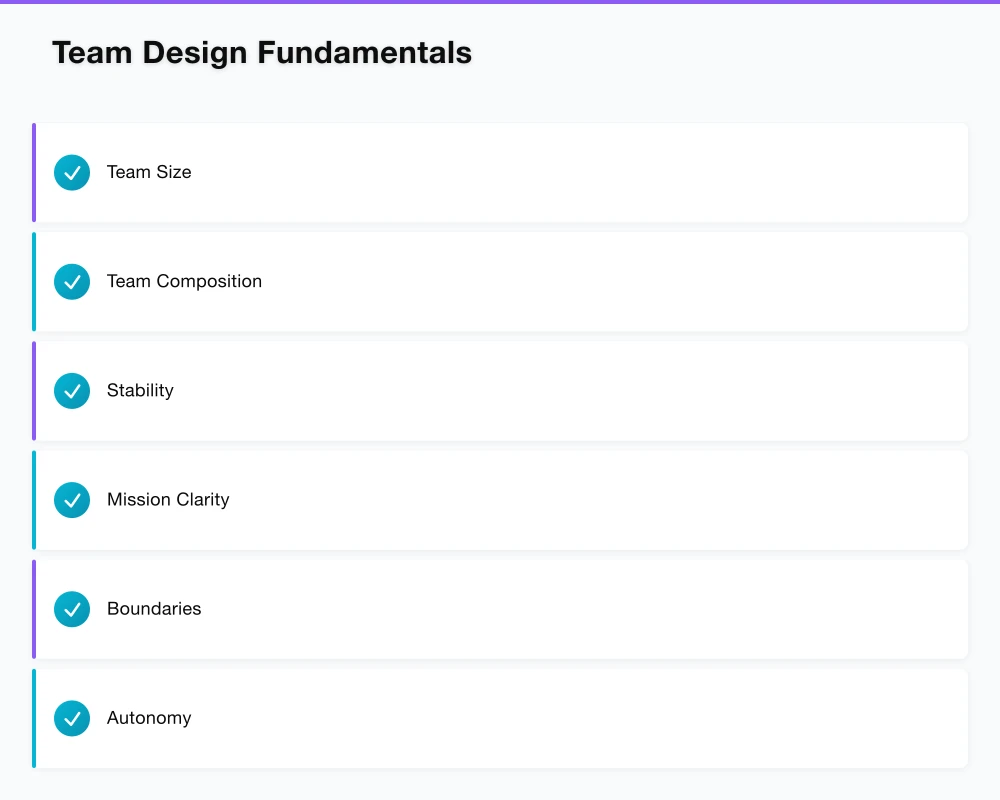
Team Design Fundamentals
Size and Structure
Team Size
Research consistently supports small teams:
- 5-9 people optimal for most work
- Communication overhead grows exponentially
- Accountability diffuses in larger groups
- Cohesion easier in smaller units
Team Composition
- Full-stack capability where possible
- Minimal external dependencies
- Complementary skills
- Experience distribution
Stability
High-performing teams need time together:
- Resist frequent reorganisation
- Allow relationships to develop
- Build shared context
- Develop team-specific practices
Clear Ownership
Mission Clarity
Each team should understand:
- What they own
- Why it matters
- How success is measured
- Who their stakeholders are
Boundaries
- Clear interfaces with other teams
- Minimal overlap in responsibilities
- Explicit handoff points
- Documented dependencies
Autonomy
- Authority to make decisions within scope
- Resources to execute independently
- Accountability for outcomes
- Protection from interference
Cognitive Load Management
Teams can only handle so much:
Types of Cognitive Load
- Intrinsic: Complexity of the work itself
- Extraneous: Unnecessary complexity from environment
- Germane: Learning and improvement
Reducing Extraneous Load
- Platform teams handle infrastructure complexity
- Clear processes reduce decision fatigue
- Good tooling removes friction
- Documentation prevents repeated discovery
Culture as Competitive Advantage
Psychological Safety
The foundation of high performance:
What It Means
- Safe to take interpersonal risks
- Questions welcomed, not punished
- Mistakes are learning opportunities
- Diverse perspectives encouraged
How to Build It
- Leaders admit their own mistakes
- Respond to vulnerability with support
- Ask questions rather than declare answers
- Celebrate learning from failure
How to Destroy It
- Punish bearers of bad news
- Blame individuals for systemic issues
- Dismiss ideas without consideration
- Allow interpersonal attacks
Ownership Mindset
Moving Beyond Tasks
- Own outcomes, not just deliverables
- Take initiative without being asked
- Consider business context
- Act as if it’s your company
Enabling Ownership
- Share business context
- Grant decision-making authority
- Hold accountable for results
- Recognise initiative
Continuous Improvement
Built Into Operations
- Regular retrospectives
- Improvement experiments
- Metrics tracking
- Feedback loops
Learning Culture
- Time for exploration
- Knowledge sharing sessions
- External engagement
- Investment in growth
Technical Excellence
Standards
- Code quality expectations
- Testing requirements
- Documentation standards
- Security practices
Enforcement
- Code review practices
- Automated quality checks
- Technical debt management
- Regular refactoring
Pride in Craft
- Celebrate quality
- Recognise technical achievement
- Discuss technical decisions
- Share interesting problems
Performance Management
Goal Setting
Effective Goals
- Connected to business outcomes
- Measurable and specific
- Challenging but achievable
- Team-level, not just individual
OKRs and Alternatives
- Objectives and Key Results work well for many
- Simpler approaches for smaller teams
- Consistency in framework matters more than which framework
- Regular review and adjustment
Feedback
Continuous Feedback
- Not just annual reviews
- In the moment when possible
- Specific and actionable
- Balanced (positive and constructive)
Feedback Mechanisms
- 1:1 meetings (weekly or biweekly)
- Peer feedback
- Retrospective insights
- 360 reviews (judiciously)
Recognition
What to Recognise
- Business impact
- Technical excellence
- Collaboration and helping others
- Improvement and learning
How to Recognise
- Public acknowledgment
- Specific and sincere
- Timely
- Varied approaches for different people
Addressing Underperformance
Early Identification
- Clear performance expectations
- Regular check-ins
- Early warning indicators
- Peer feedback
Intervention Approach
- Direct conversation about gap
- Understand root causes
- Clear improvement expectations
- Support and coaching
When to Move On
- Improvement efforts exhausted
- Impact on team too significant
- Fairness to other team members
- Documented process followed
The Manager’s Role
Technical vs People Leadership
The Tension
- Technical credibility matters
- People skills matter more
- Both require time and focus
- Trade-offs are inevitable
Resolution Approaches
- Staff engineer track for technical focus
- Manager track for people focus
- Clear expectations for each
- Support for both paths
Effective 1:1s
Purpose
- Relationship building
- Problem surfacing
- Coaching and development
- Alignment and context
Structure
- Regular schedule
- Their agenda primarily
- Protected time
- Action follow-through
Coaching Approach
Questions Over Answers
- Help them think through problems
- Build their judgment
- Avoid creating dependency
- Develop their leadership
Development Focus
- Career aspirations
- Skill gaps to address
- Growth opportunities
- Stretch assignments
Hiring for High Performance
What to Look For
Beyond Technical Skills
- Collaboration ability
- Learning orientation
- Ownership mindset
- Communication skills
Culture Fit vs Add
- Shared values alignment
- Diverse perspectives welcome
- Complement existing team
- Challenge and improve culture
Interview Process
Signal Extraction
- Structured interviews
- Multiple perspectives
- Real work simulation
- Reference checks that matter
Candidate Experience
- Respect their time
- Represent accurately
- Quick decisions
- Feedback when possible
Onboarding for Success
First Impressions
- Equipment and access ready
- Buddy or mentor assigned
- Clear first project
- Regular check-ins
Building Productivity
- Documentation and resources
- Progressive responsibility
- Safe space for questions
- Integration into team rhythms
Sustainability
Avoiding Burnout
Warning Signs
- Decreased engagement
- Quality degradation
- Cynicism increase
- Physical symptoms
Prevention
- Sustainable pace enforcement
- Time off encouragement
- Workload monitoring
- Open discussion
Managing Intensity
High Performance ≠ Always High Intensity
- Sprints require recovery
- Sustainable pace over time
- Crisis response vs normal operations
- Protected time for thinking
Team Renewal
Preventing Stagnation
- New challenges
- Role rotations
- External perspectives
- Continuous learning
Managing Departures
- Knowledge transfer processes
- Celebration of contributions
- Honest reflection on reasons
- Strengthen remaining team
Measuring Team Health
Metrics Worth Tracking
Delivery Metrics
- Cycle time
- Deployment frequency
- Change failure rate
- Recovery time
Quality Metrics
- Bug rates
- Customer-reported issues
- Technical debt trends
- Test coverage
Team Metrics
- Engagement surveys
- Retention rates
- Internal mobility
- Development progression
Qualitative Assessment
Regular Retrospectives
- What’s working well
- What could improve
- Actions and follow-through
- Trend observation
Skip-Level Conversations
- Direct access to team members
- Different perspective than managers
- Trust building
- Early warning system
Scaling Considerations
Growing Teams
When to Split
- Cognitive load too high
- Communication breaking down
- Ownership unclear
- Subteams forming naturally
How to Split
- Clean boundaries
- Minimal dependencies
- Preserved relationships
- Clear ownership transfer
Maintaining Culture at Scale
Challenges
- Direct contact decreases
- Subcultures emerge
- Consistency harder
- Communication complex
Approaches
- Explicit culture documentation
- Leader development investment
- Cross-team rituals
- Mobility encouragement
Conclusion
High-performing technology teams don’t happen by accident. They result from intentional design, consistent leadership, and continuous investment.
The CTO’s role is creating conditions for excellence: clear ownership, psychological safety, appropriate autonomy, technical standards, and sustainable pace. Within these conditions, talented people can do their best work.
Build these conditions deliberately. Measure team health continuously. Adjust based on feedback. And remember: the goal isn’t pushing teams harder—it’s enabling them to perform better.
For technical deep-dives on the cloud and IT topics I cover strategically, visit Cloud Geeks — our specialist IT infrastructure blog.
My consultancy Ganda Tech Services operates three specialist divisions covering cloud infrastructure, web development, and mobile apps for Australian businesses.
About the Author
Ashish Ganda is the founder of Ganda Tech Services, a Sydney-based technology consultancy specialising in cloud infrastructure, web development, and mobile app solutions for Australian businesses.
Digital Transformation Roadmap 2026
A 12-month framework for Australian SMBs ready to modernise — phases, tools, and milestones.
Almost done
Check your inbox and click the confirmation link to get your download.