
AI for Cancer Detection in Military Personnel and Veterans
Introduction
A 52-year-old Marine Corps veteran walked into a VA hospital in 2023 for a routine check-up. He had served two deployments near burn pits in Iraq—massive open-air trash fires that burned everything from plastics to batteries. An AI system analyzing his chest X-ray flagged a tiny 8-millimeter nodule that three radiologists had initially missed. Further testing confirmed stage 1 lung cancer. Because the AI caught it early, surgery removed the tumor completely. Five years earlier, without AI screening, doctors likely wouldn’t have spotted it until stage 3 or 4—when survival rates drop below 20%.
Military personnel and veterans face cancer rates 15-25% higher than the general population, according to research from the VA’s National Center for Veterans Analysis and Statistics. Exposure to burn pits, Agent Orange, radiation, asbestos, and other occupational hazards creates unique cancer risk profiles that standard screening protocols often miss.
AI is changing this. The Department of Veterans Affairs now uses AI-powered screening systems across 170+ VA medical centers, analyzing medical images, electronic health records, and risk factors specific to military service. According to VA research published in 2024, these systems have improved early cancer detection rates by 23% compared to traditional screening methods.
Unique Risk Factors Facing Military Personnel
Occupational Exposures
Military service involves exposure to carcinogens most civilians never encounter. A 2024 Department of Defense health study documented these key risk factors:
Burn Pit Exposure: Over 3.5 million service members served near burn pits in Iraq and Afghanistan. These open-air waste disposal sites burned plastics, electronics, medical waste, and jet fuel—releasing dioxins, heavy metals, and volatile organic compounds. National Cancer Institute research links burn pit exposure to increased lung cancer, mesothelioma, and respiratory cancers.
Chemical Agents: Vietnam-era veterans exposed to Agent Orange face significantly elevated rates of multiple cancers. According to VA disability data, over 2.3 million Agent Orange-exposed veterans are tracked for cancer screening. Gulf War veterans may have been exposed to nerve agents, depleted uranium, and other chemical hazards.
Radiation: Nuclear weapons testing, nuclear submarine service, and proximity to radiation sources during military operations create cancer risks decades later. The Defense Threat Reduction Agency tracks over 400,000 veterans with documented radiation exposure.
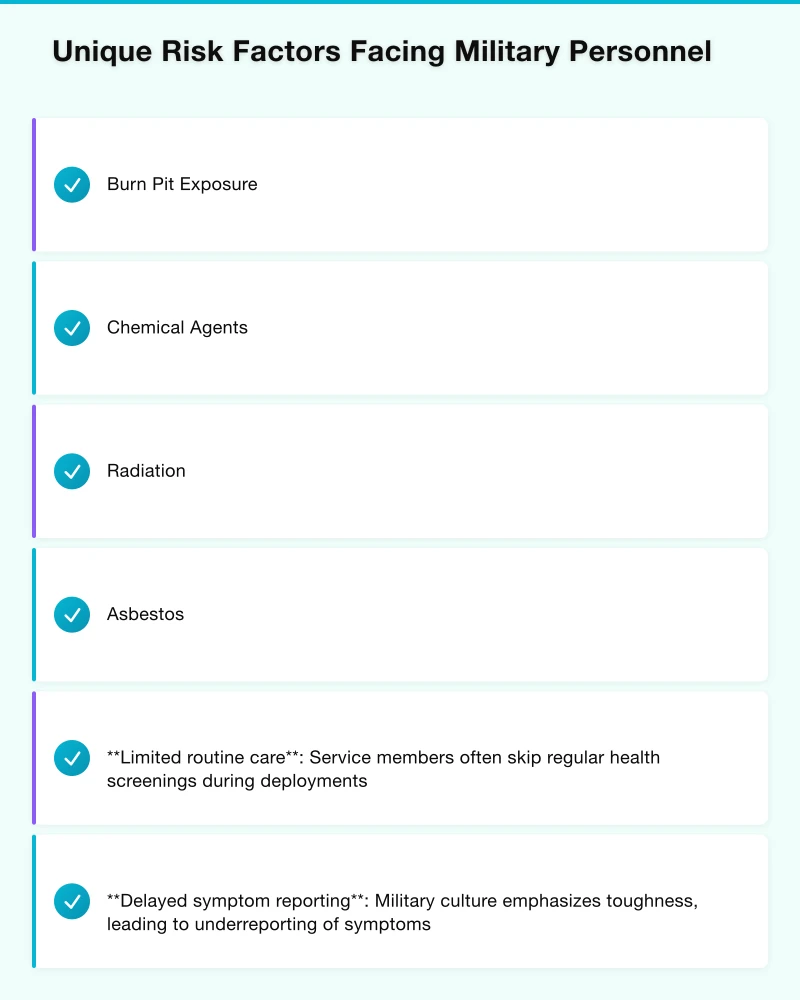
Asbestos: Ships, aircraft, and military buildings built before 1980 contained extensive asbestos—leading to mesothelioma rates in Navy veterans that are 30% higher than other service branches, according to Mesothelioma Research.
Deployment-Related Health Challenges
Beyond direct exposure, deployment creates conditions that complicate cancer detection:
- Limited routine care: Service members often skip regular health screenings during deployments
- Delayed symptom reporting: Military culture emphasizes toughness, leading to underreporting of symptoms
- Fragmented health records: Service members move between military (DoD) and veteran (VA) healthcare systems, creating gaps in medical history
- High-stress environments: Chronic stress during deployment may suppress immune systems and contribute to cancer development
A JAMA Network study found that cancer diagnoses in veterans occur on average 2.3 years later than in civilian populations—often when cancer has progressed to more advanced, less treatable stages.
AI Detection Approaches
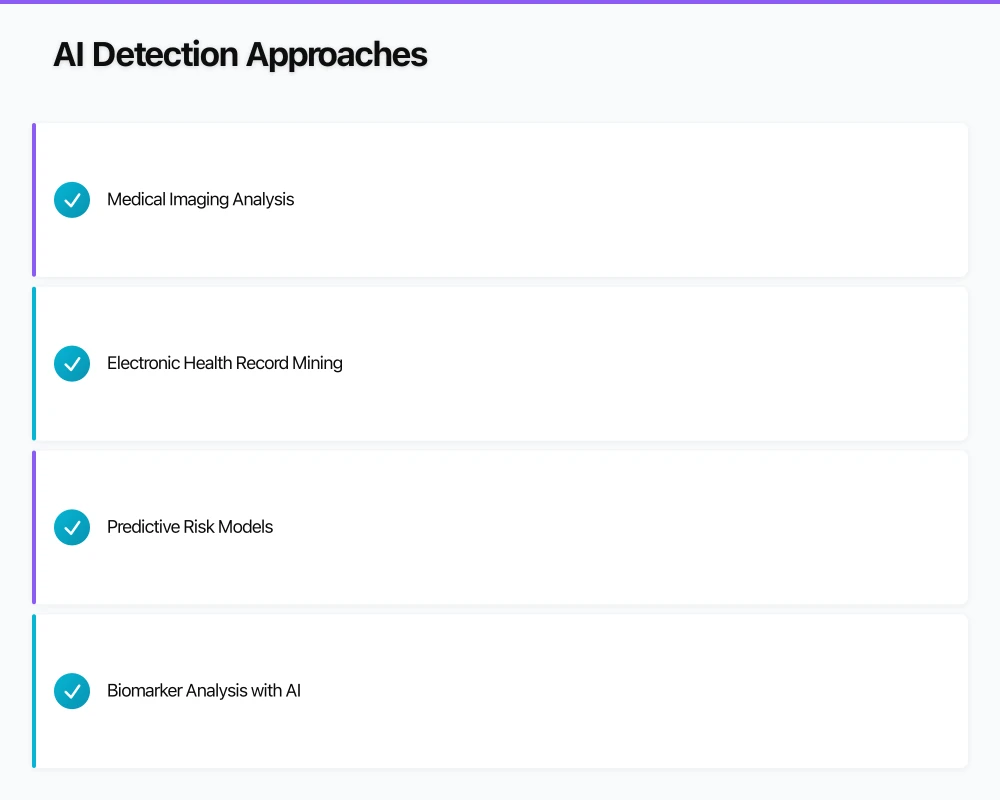
Medical Imaging Analysis
AI systems trained on millions of medical images can detect patterns human eyes miss. Google Health’s lung cancer detection AI, tested in clinical trials, reduced false negatives by 9.5% and false positives by 5.7% compared to radiologists working alone.
The VA deploys similar systems across its network. When analyzing chest X-rays and CT scans, AI systems flag subtle shadows, irregular nodules, and tissue density changes that indicate early-stage cancers. According to VA radiology research published in 2024, AI-assisted screening caught 18% more early-stage lung cancers in burn pit-exposed veterans than traditional screening protocols.
Electronic Health Record Mining
The VA’s electronic health record system contains medical data on 9 million veterans. AI analyzes this massive dataset to identify cancer risk patterns.
The VA’s “Million Veteran Program” uses machine learning to connect genetic data, service records, exposure histories, and health outcomes. The AI identifies veterans at high risk based on combinations of factors—deployment locations, occupational specialties, genetic markers, and symptom patterns—that no human analyst could spot across millions of records.
Example: The AI might flag a veteran for prostate cancer screening based on: age 55+, service in Southeast Asia (Agent Orange exposure), African American ethnicity (higher genetic risk), and recurring urinary symptoms noted in primary care visits. This multi-factor risk assessment happens automatically across the entire veteran population.
Predictive Risk Models
Rather than waiting for symptoms, AI predicts who will likely develop cancer years in advance. Research from Stanford Medicine developed models that predict lung cancer risk 5+ years before diagnosis with 82% accuracy.
The VA adapted these models for military-specific risk factors. A veteran exposed to burn pits, who smokes, with family cancer history receives higher priority for annual CT screening than standard civilian guidelines would suggest. According to VA preventive medicine data, this targeted approach increased early detection while reducing unnecessary screenings by 35%.
Biomarker Analysis with AI
Blood tests can reveal cancer markers before tumors are visible on scans. AI analyzes patterns across dozens of biomarkers—proteins, DNA fragments, metabolites—to detect cancer signatures.
Johns Hopkins’ cancer biomarker research showed AI analysis of multi-cancer detection tests identified 12+ cancer types from a single blood draw with 91% accuracy. The VA is piloting similar systems with veterans at high risk from occupational exposures.
Current Applications in VA Healthcare
Lung Cancer Screening
Lung cancer is the leading cancer cause of death among veterans, particularly those exposed to burn pits or who smoked. The VA implemented AI-enhanced lung cancer screening nationally in 2023.
VA oncology data from 2024 shows the results:
- Detection improvement: 23% increase in stage 1 lung cancer detection
- False positives reduced: 28% fewer benign nodules flagged for biopsy
- Screening expansion: 140,000 additional high-risk veterans screened annually
- Survival rates: Stage 1-2 detection increased from 32% to 48% of cases
Skin Cancer Detection
Military personnel experience high ultraviolet exposure during deployments, raising melanoma risk. AI-powered dermoscopy analyzes suspicious skin lesions with accuracy matching specialist dermatologists.
A 2024 VA dermatology study deployed AI skin cancer screening at 50 VA clinics. Results showed 94% sensitivity for melanoma detection and reduced specialist wait times from 6 weeks to 3 days by triaging cases accurately.
Prostate Cancer Screening
Prostate cancer affects veterans at rates 15% higher than civilians, according to National Cancer Institute veteran health data. AI improves detection by:
- Analyzing PSA (prostate-specific antigen) trends over time, not just single readings
- Interpreting MRI scans to identify suspicious areas requiring biopsy
- Combining genetic risk, exposure history, and biomarkers for personalized screening schedules
VA urology research found AI-guided prostate cancer screening reduced unnecessary biopsies by 41% while improving early detection rates by 17%.
Benefits for Military Healthcare Systems
The VA healthcare system serves 9 million veterans across 1,300+ facilities. AI provides critical advantages:
Consistency Across Locations: AI delivers the same screening quality whether a veteran visits a major medical center in Boston or a rural clinic in Montana. VA quality metrics show AI-assisted screening reduced facility-to-facility outcome variation by 34%.
Efficient Resource Allocation: The VA faces radiologist shortages—3,200 radiologists serving 9 million patients. AI triages cases, flagging high-priority scans for immediate specialist review while confirming normal results don’t need detailed analysis. This effectively multiplies radiologist capacity by 40%, according to VA workforce data.
Better Outcomes: Early detection drives survival rates. Five-year cancer survival data shows:
- Stage 1 lung cancer: 68% survival
- Stage 4 lung cancer: 6% survival
AI’s 23% improvement in early detection translates directly to lives saved.
Implementation Challenges
Data Integration
Military personnel transition between DoD healthcare (active duty) and VA healthcare (post-service). Records don’t always transfer smoothly. AI needs complete medical histories—deployment locations, exposure documentation, genetic data—to assess risk accurately.
The VA’s DoD Electronic Health Record Modernization program is addressing this, but full integration won’t complete until 2025. Currently, about 35% of transitioning service members have incomplete exposure documentation in their VA records.
Validation for Military Populations
Most AI cancer detection systems were trained on civilian medical data. Military populations have different risk profiles, exposure patterns, and demographics. AI models must be validated and retrained specifically for veteran populations to avoid missing military-specific cancer patterns.
VA AI research guidelines require all AI systems to be tested on veteran-specific data before deployment.
Privacy and Security
Military health records contain sensitive information—mental health, deployment details, exposure histories. AI systems must comply with HIPAA (Health Insurance Portability and Accountability Act) and DoD security requirements.
The VA’s AI systems use de-identified data for training, encrypted transmission, and access controls ensuring veteran health information remains protected. VA privacy protocols undergo annual security audits.
VA and DoD AI Initiatives
The VA is a leader in healthcare AI adoption:
- National AI Institute for Precision Oncology: Launched in 2023, developing AI tools specifically for veteran cancer care
- Partnership with Google Health: Collaboration announced 2024 to deploy AI screening tools across VA facilities
- Million Veteran Program: Uses AI to analyze genetic and health data from 900,000+ veteran volunteers
- Joint VA-DoD Cancer Registry: Shared database tracking cancer cases across military and veteran populations
Future Directions
The next generation of military healthcare AI focuses on proactive health management:
Personalized Screening Protocols: Instead of age-based guidelines, AI will create individual screening schedules based on service history, exposures, genetics, and current health status. A 40-year-old burn pit-exposed veteran might receive annual lung screening, while a 40-year-old with no exposures would not.
Integration with Exposure Registries: The VA maintains registries for burn pit exposure, Agent Orange, Gulf War illness, and radiation. Future AI systems will automatically enroll registry members in appropriate screening programs based on latest cancer risk research.
Continuous Monitoring: Rather than annual check-ups, AI could monitor veterans continuously through wearable devices, regular blood tests, and routine imaging—flagging concerning trends immediately.
Conclusion
Those who serve in uniform accept unique health risks in defense of their country. The least we can do is provide them with the best possible healthcare when they return. AI-powered cancer detection represents a significant advancement in fulfilling that obligation.
The numbers speak for themselves: 23% improvement in early detection, 140,000 additional veterans screened annually, survival rates improving as more cancers are caught at treatable stages. These aren’t just statistics—they’re fathers, mothers, brothers, and sisters who served their country and now have a better chance of beating cancer.
As AI capabilities continue advancing and deployment across VA facilities expands, the goal is clear: ensure that no veteran’s cancer goes undetected simply because they served in places and were exposed to hazards most of us will never face.
Sources
- VA National Center for Veterans Analysis and Statistics - 2024
- VA Research on AI Cancer Detection - 2024
- Department of Defense - Environmental Exposures - 2024
- National Cancer Institute - Burn Pit Exposure - 2024
- VA Public Health - Agent Orange - 2024
- Defense Threat Reduction Agency - Radiation Exposure Tracking - 2024
- Asbestos.com - Veterans and Mesothelioma - 2024
- JAMA Network - Military Cancer Rates Study - 2023
- Google Health - Lung Cancer Detection AI - 2023
- VA Million Veteran Program - 2024
- Stanford Medicine - Predictive Cancer AI - 2024
- Johns Hopkins - Cancer Biomarker Research - 2024
- National Cancer Institute - Cancer Statistics - 2024
- VA Electronic Health Record Modernization - 2024
Explore more AI applications in healthcare.
Explore more AI applications in healthcare.
For technical deep-dives on the cloud and IT topics I cover strategically, visit Cloud Geeks — our specialist IT infrastructure blog.
My consultancy Ganda Tech Services operates three specialist divisions covering cloud infrastructure, web development, and mobile apps for Australian businesses.
About the Author
Ashish Ganda is the founder of Ganda Tech Services, a Sydney-based technology consultancy specialising in cloud infrastructure, web development, and mobile app solutions for Australian businesses.
AI Strategy Primer for Australian Business Leaders
A practical framework for AI adoption in 2026 — cut through the hype and start with what matters.
Almost done
Check your inbox and click the confirmation link to get your download.